
Blackhawk Golden ‘K’ General Meeting
Minutes
July 1st, 2026
President Richard Johnson presided, and called the meeting to order with a ring of the bell at 9:30AM.
An Executive Board meeting occurred today.
Richard Johnson led with the singing of America, the National Anthem, and the Pledge of Allegiance.
Invocation: Richard Johnson, mentioning keeping cool from the heat, and the children.
Raffle: Linda Bontly oversaw the ticket sales and drawing this week.
The weekly pot was $14 and the big (Joker) pot was $190.
Hanako drew a ticket from the bucket, ticket number 620. Congratulations to the winner, Jenny Turco.
The deck of cards has 40/53 cards remaining. Jenny Turco drew the 4♣.
A collection was passed for the Salvation Army.
Happy Box: John Sarnow announced he is happy because history is cool: In 1861 the first Union Army went to Gettysburg and suffered 80% casualties.
Jenny Turco announced she is happy because she won the raffle, and is donating the proceeds to the Mid-Year Appeal.
Bob Wilcox announced he is happy because the sun is shining, and there is no mowing.
Mel Lemirande announced he is happy because it is 90-degree weather, and he swims every day.
Jokes: Joker Roger Willeford had a good joke about his wife telling him he had to quit acting like a flamingo. Insulted, he responded he was “putting his foot down.”
Member Health: Linda Bontly had a status update on Jerry Langdok, who is recovering from surgery a few weeks ago.
Ray Cummings had a status update on Dan Heerey, who is recovering at The Woods in Greenfield, and speaking better.
John Sarnow and Lariena have birthdays this month, and a song was sung.
Other Announcements: Officer elections are being held today!
Ray Szczepaniak spoke upon the Mid-year appeal, and its included survey to better our club. Greg Turco spoke upon historic uses of the funds.
Committee Reports: John Janes announced the 4th of July parade in Milton will begin at 1PM. Volunteers should be there at 11AM.
John Janes announced there will be a Blood Drive Monday at St. Paul’s, if the A/C is functional, and again Tuesday. Monday has 28 donors scheduled, and another 18 Tuesday. Walk-ins are always welcome.
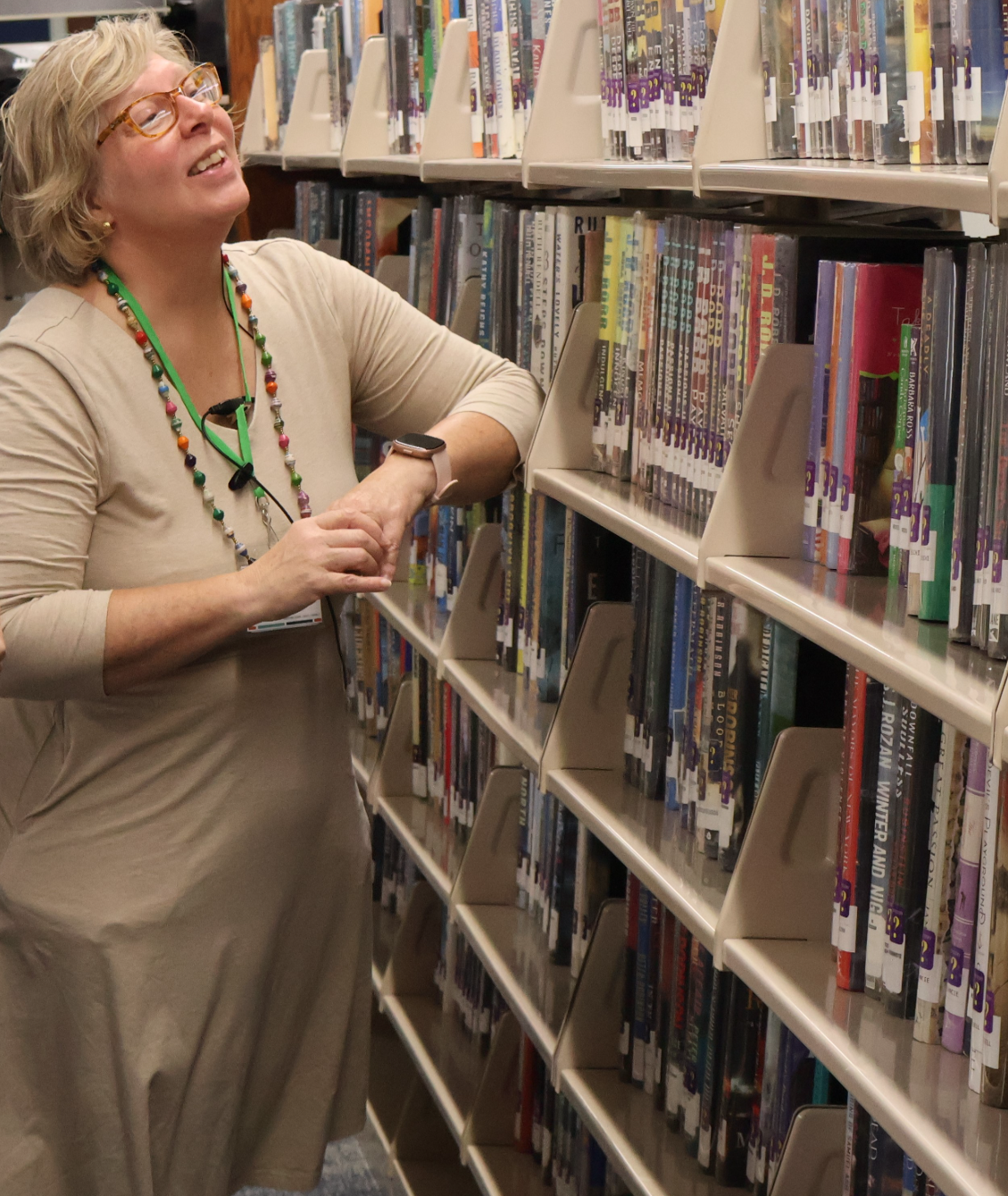
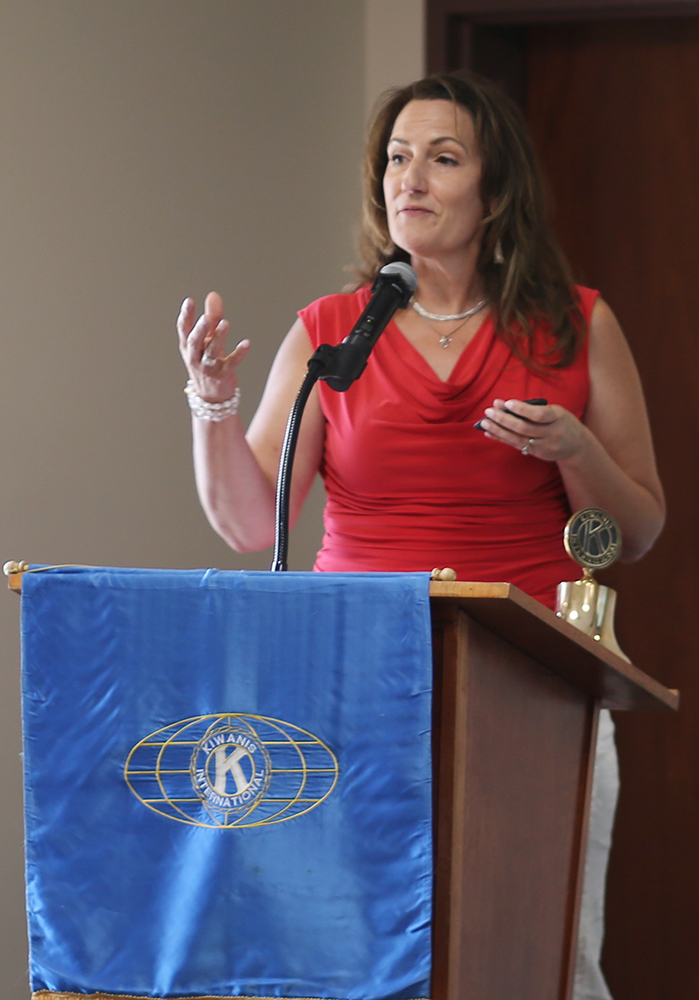
April Wright introduced the day’s speaker, Amy Christian. Amy is a programs director at Hedberg Public Library, with extensive knowledge of the many programs the library offers. Today, she will speak upon those numerous offerings.
Hedberg is part of the Arrowhead library system, 29 libraries from Rock, Walworth, Racine and Kenosha counties.
Hedberg has an extensive ‘Library of Things’ collection, including books, DVD, CDs, video games, bakeware, exercise equipment, radon detectors, Milwaukee Zoo and Art Museum tickets, graphic novels (similar to comic book art styles), and other items.
Interlibrary loan, run by the federal government, allowed finding titles not available in the local library.
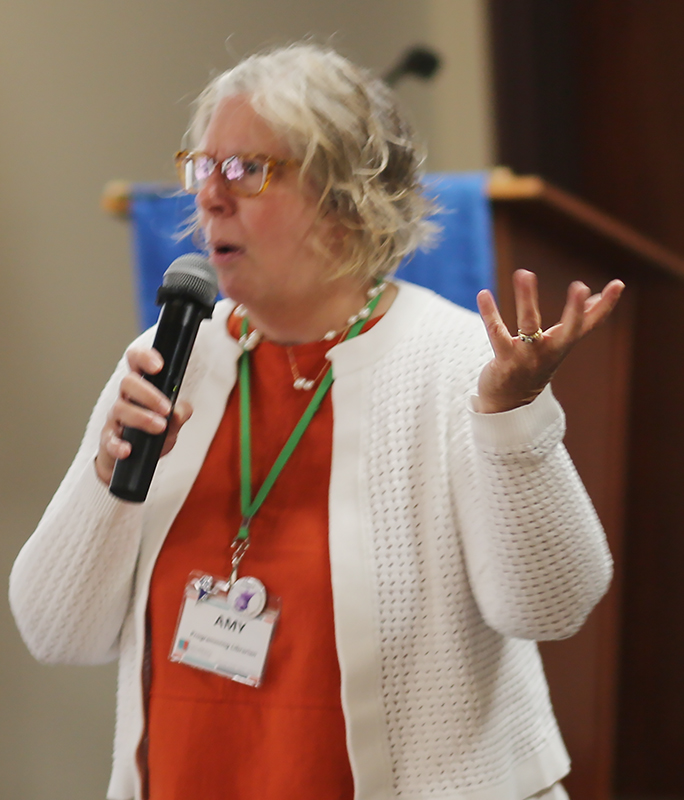
Streaming services are available.
Multiple book clubs exist, including non-fiction, contemporary fiction, and a popular group about cooking.
Numerous computers are available.
Hedberg is pursuing having someone from the Workforce Development Center available for one-on-one.
Hedberg has health and wellness programs.
The library is a proud member of the literacy council of Rock county.
Kiwanis member Bob Wilcox asked, “What does Hedberg currently offer for memory care?” Amy replied, “The Memory Café meets every third Thursday. Last month, they rode rickshaws for two around Palmer Park. Activities to jog memory include ‘Music & Memory’ which gives a playlist custom tailored to each individual.”
Hedberg library offers some of the cheapest printing around: 10c per page, or 25c for color. It is one of the few remaining places left that provides fax capabilities for 10c / page.
Meeting room are available for any type of event, save for politics or sales.
Accessibility options for library content include large print, braille and blowing up your existing items.
There are 3D printers available.
Vita-Tax is a program where volunteer income tax specialists, currently two studying accounting at BTC and five local bank managers, help complete tax returns. Last year, the community was saved over $25,000, and 86 people were assisted (the IRS’ goal was 50).
Home schooling resources are available.
Poetry Pathways is a program that allows anyone that submits poetry to have it added to a magazine.
Bob Wilcox inquired, “How do you track books” [for replacement]? Amy answered, “Multiple systems are in place, including the number of checkouts, the last checkout, a book’s condition and its content.”
Local artists’ works are featured with different types every month.
Kiwanian Jenny Turco asked, “What becomes of the art? Is art from deceased artists stored?” Amy responded, “We don’t house art. Some pieces are permanent.”
Hedberg at Home is a delivery service. In example, if someone is having surgery in two weeks, they can be surveyed for interests, and then the content delivered directly to their house. For example, one woman likes audio books, and receives them regularly.
Kiwanis member Tom Neumann asked, “My car has no CD player.” Amy, “We offer ‘Play-a-way,’ a stick style player with earbuds, as one option. The Libby app and others support Bluetooth.”
Libby is an app that supports renting books, which have a timer. The option to increase the rental duration exists, of the books are returned automatically.
Tom Neumann inquired, “How many audiobooks are available?” Amy replied, “At least 1,000.”
Puzzle tables are a popular form of entertainment at the library.
Hedberg has a gentleman for P.C. assistance (not repair).
Karen from the Rock County Aging and Disability Resource Center is nearly always at the Memory Cafés.
Kiwanian Greg Turco inquired, “What programs would Kiwanis best partner with?” Amy responded that it is great we have interest, and to please speak with someone in marketing.
Kiwanis member Ray Szczepaniak asked, “Does my Milton library card work at Hedberg?” Amy, “Yes! Any libraries in the Arrowhead system share membership.”
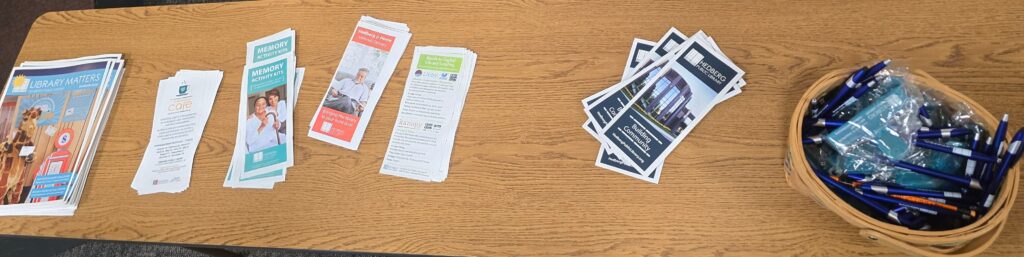
Tom Neumann asked, “Are schedules available for the various programs and events?” Amy answered, “Yes! Please pick up some of the pamphlets available here now, or come to the library. We try to keep everything free!”
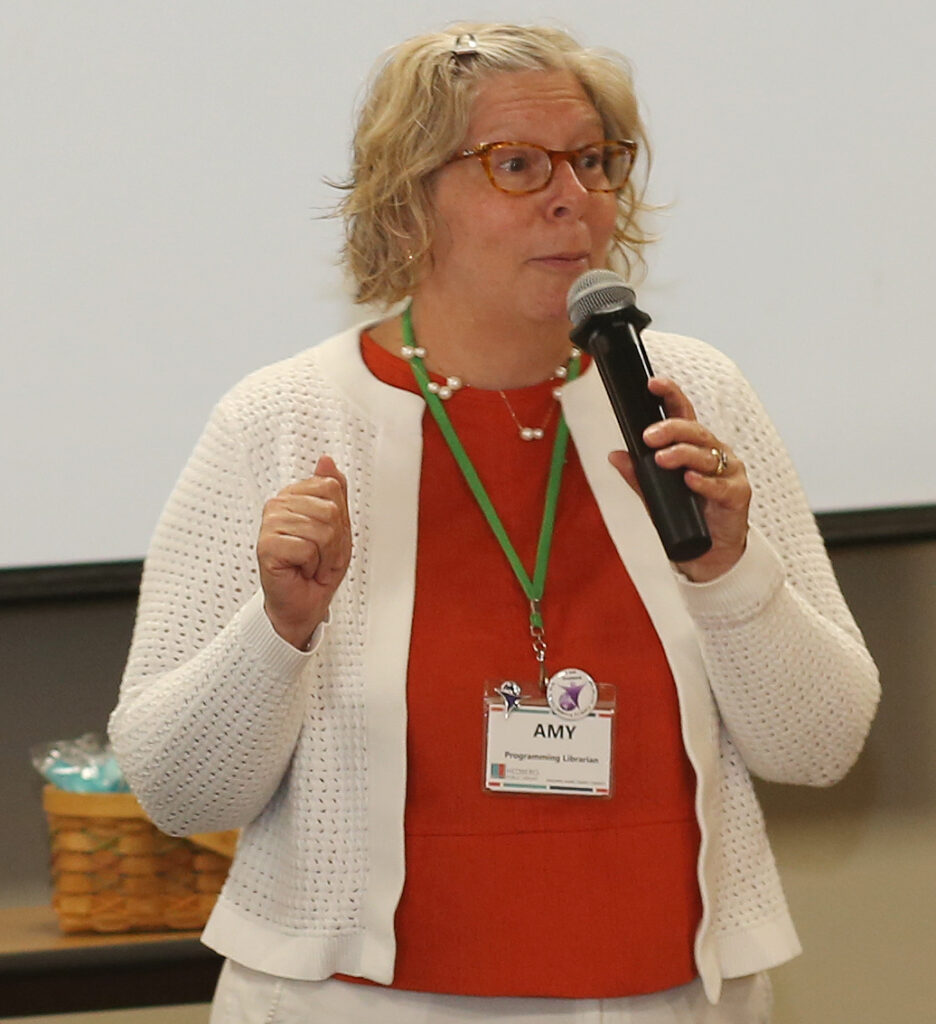
Kiwanian John Janes inquired, “Where does the bookmobile reach?” Amy replied, “The new bookmobile is great! Out goal is to visit the city’s unreached areas. I drive it, and so does one other individual. It has children’s and adult programming, selected by staff members.”
Amy’s presentation was well received and appreciated.
April Wright thanked Amy Christian for speaking and presented her with a Kiwanis Parker pen.
Richard Johnson adjourned the meeting with a ring of the bell at 10:50AM.
On this day:
1731 Benjamin Franklin and members of his ‘Junto’ community improvement club draw up articles of agreement to found the Library Company of Philadelphia, the first public library in British America
1776 First vote on Declaration of Independence for Britain’s North American colonies
1836 US President Andrew Jackson announces to Congress James Smithson’s bequest of 100,000 gold sovereigns to found the Smithsonian Institution in Washington
1847 First US postage stamps go on sale, 5 cent Franklin and 10 cent Washington, NYC
1858 Joint reading of Charles Darwin and Alfred Russel Wallace’s papers on evolution to the Linnean Society renders audience awestruck and silent
1859 Balloon covers a record 809 miles over St Louis in 19 hours
1861 First public schoolhouse opens at Washington and Mason St, San Francisco
1862 The Revenue Act of 1862 establishes first US income tax (3% of income over $600, 5% of income over $10,000), and a variety of excise taxes on goods, in order to fund the Civil War is signed into law
1862 US Internal Revenue Law imposes first federal taxes on inheritance, tobacco, and incomes over $600 (progressive rate)
1863 Free city delivery of mail begins in 49 US cities; postage 3 cents per half-ounce
1874 First zoo in the United States opens in Philadelphia, Pennsylvania
1890 Canada and Bermuda are linked by telegraph cable
1893 San Francisco Bay City Club opens the first US bicycle race track, made of wood
1899 Gideon Society established to place bibles in hotels, is founded in Janesville, Wisconsin
1903 Tour de France: Inaugural race begins in Montgeron, a south-eastern suburb of Paris
1908 “SOS” (· · · – – – · · ·) distress signal becomes the worldwide standard for help
1917 257cm (100-inch) diameter mirror for telepscope is delivered to Mount Wilson Observatory, in Los Angeles, California
1923 First permanent radio network: AT&T (WEAF NY & WMAF Mass)
1931 Ice vending machines introduced in Los Angeles 25 lbs, 15 cents
1934 Brookfield Zoo opens in Chicago, Illinois
1934 First x-ray photo of entire body, taken by Arthur Fuchs of Eastman-Kodak Company in Rochester, New York
1941 Bulova Watch Company pays $9 for the first ever television commercial, which airs during a broadcast of Brooklyn Dodgers-Philadelphia Phillies baseball game
1941 Mammoth Cave National Park established with 45,310 acres, including world’s largest cave network in Kentucky, US
1947 Basketball Association of America (BAA), which later became the National Basketball Association (NBA), holds its inaugural college player draft
1949 “Magna Carta of the Information Age” “A Mathematical Theory of Communication,” article of book by Claude Shannon and Warren Weaver laying foundation for information theory, published in “Scientific American”
1956 Elvis Presley, wearing a tuxedo, sings to a basset hound on The Steve Allen Show
1962 NASA establishes the Launch Operations Center on Merritt Island, Florida; later renamed as the John F. Kennedy Space Center (KSC)
1963 The Beatles record “She Loves You” and “I’ll Get You”
1963 ZIP (Zone Improvement Plan) Codes are introduced for United States mail
1966 First color television transmission in Canada is broadcast from Toronto
1966 NASA launches spacecraft Explorer 33
1966 US national health insurance program Medicare goes into effect
1967 The Beatles’ album “Sgt. Pepper’s Lonely Hearts Club Band” goes to #1 in the United States and stays there for 15 weeks
1968 US, Britain, USSR, and 58 nations sign the Nuclear Nonproliferation Treaty
1971 North Carolina becomes the 38th state to approve lowering the voting age to 18, ratifying the Twenty-Sixth Amendment to the United States Constitution
1971 Washington becomes the first state to ban sex discrimination
1979 Sony introduces the Walkman, first popular portable cassette player
1981 Radio Shack’s third release of Model III TRSDOS 1.3
1961 Diana, princess of Wales born this day in 1961, consort (1981–96) of Prince Charles and mother of Princes William and Harry—was widely admired for her charity work and style, and her 1997 death caused a massive outpouring of grief
1982 Soviets launch their first satellite, Kosmos-1383
1982 Space Shuttle Challenger moves overland from California to NASA Dryden
1991 “Terminator 2: Judgement Day,” directed by James Cameron and starring Arnold Schwarzenegger, Linda Hamilton, and Edward Furlong, premieres at Century City, California
1993 1 second “leap” adjustment added to the Coordinated Universal Time (UTC) clock
1993 STS-57, Space Shuttle Endeavour, lands at the Kennedy Space Center, Florida
1997 STS-94 mission, 23rd Columbia flight, launches into orbit
Philadelphia has always been an important city in America. It is one of the top ten biggest cities in the country, and once was the second biggest. It is also home to important historical artifacts and buildings such as the Liberty Bell and Independence Hall, as well as the nation’s first zoo, the Philadelphia Zoo, which opened on July 1, 1874. Today we celebrate this zoo, along with other American zoos!
A Zoo—short for a zoological park—is a place that contains animals and exists to entertain, educate, engage in scientific research, and focus on conservation. Early zoos, known as menageries, were private collections of animals held by the wealthy. They existed as early as 2,500 BCE, being found in Egypt and Mesopotamia. They were found soon afterward in ancient China, Greece, and Rome. Aztec Emperor Montezuma II had one of the first collections of animals in the Western Hemisphere.
It’s rather likely you know what type of person an early bird is, and what the idioms “early bird gets the worm” and “early bird catches the worm” mean. The phrases have been in use in the English language at least since 1605 and are uttered quite frequently. An early bird will be among the first to arrive at a store when there is a limited amount of an item on sale, the first to arrive at a restaurant when it opens, and the first to arrive at a popular fishing spot in the morning. Just like the first Robin hopping on the morning dew looking for worms, they will have the best chance at success. Not much is known about Early Bird Day—apparently no one was being an early bird when it came to writing its history down, and its story now seems to have dove underground like a prized nightcrawler. But just as it’s likely you know what an early bird is, it’s also likely that Early Bird Day is for spending the day like an early bird.
Author Wayne Reinagel created International Joke Day in 1994. The holiday was originally used to promote his joke books, the first of which was 250 Funniest Office Jokes, Memos & Cartoon Pinups. He chose July 1 as the date because it was the halfway point of the year. In the early years of the holiday, the International Joke Contest also began on the date.
Jokes are a type of humor that use words in a narrative way to make people laugh. They are not to be taken seriously, and a cooperative effort must be put in by both the teller and the audience for them to be effective: both participants must agree that the words being conveyed are part of a joke. To clue a listener in that there will be a joke, framing must take place. Some examples of framing phrases include “Have you heard this one?” and “Reminds me of a joke I heard.” A story then builds until it ends with a punchline that gets the listener to laugh. Jokes don’t contain extra information—only that which is relevant to get a listener to a punchline is included.
Minutes by Ryan Lewis.
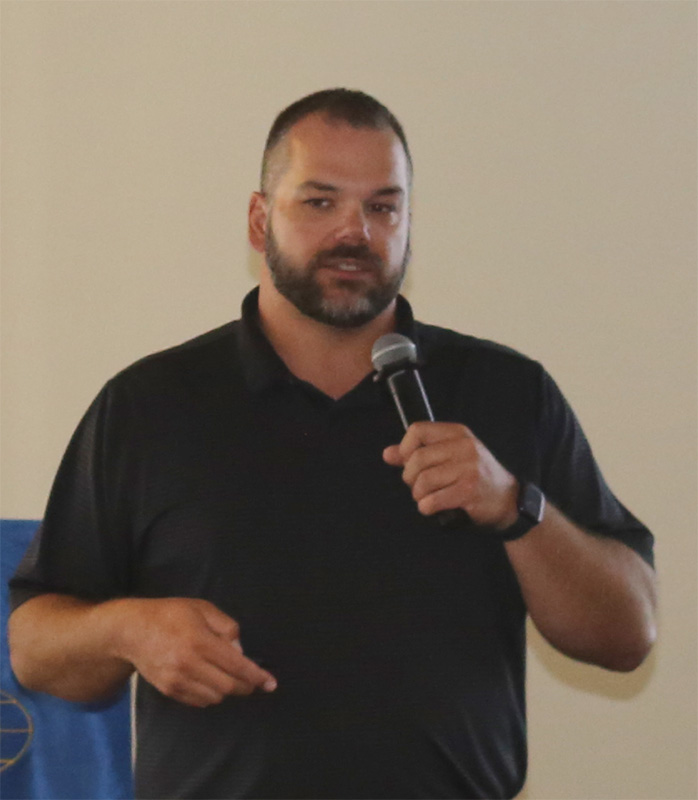
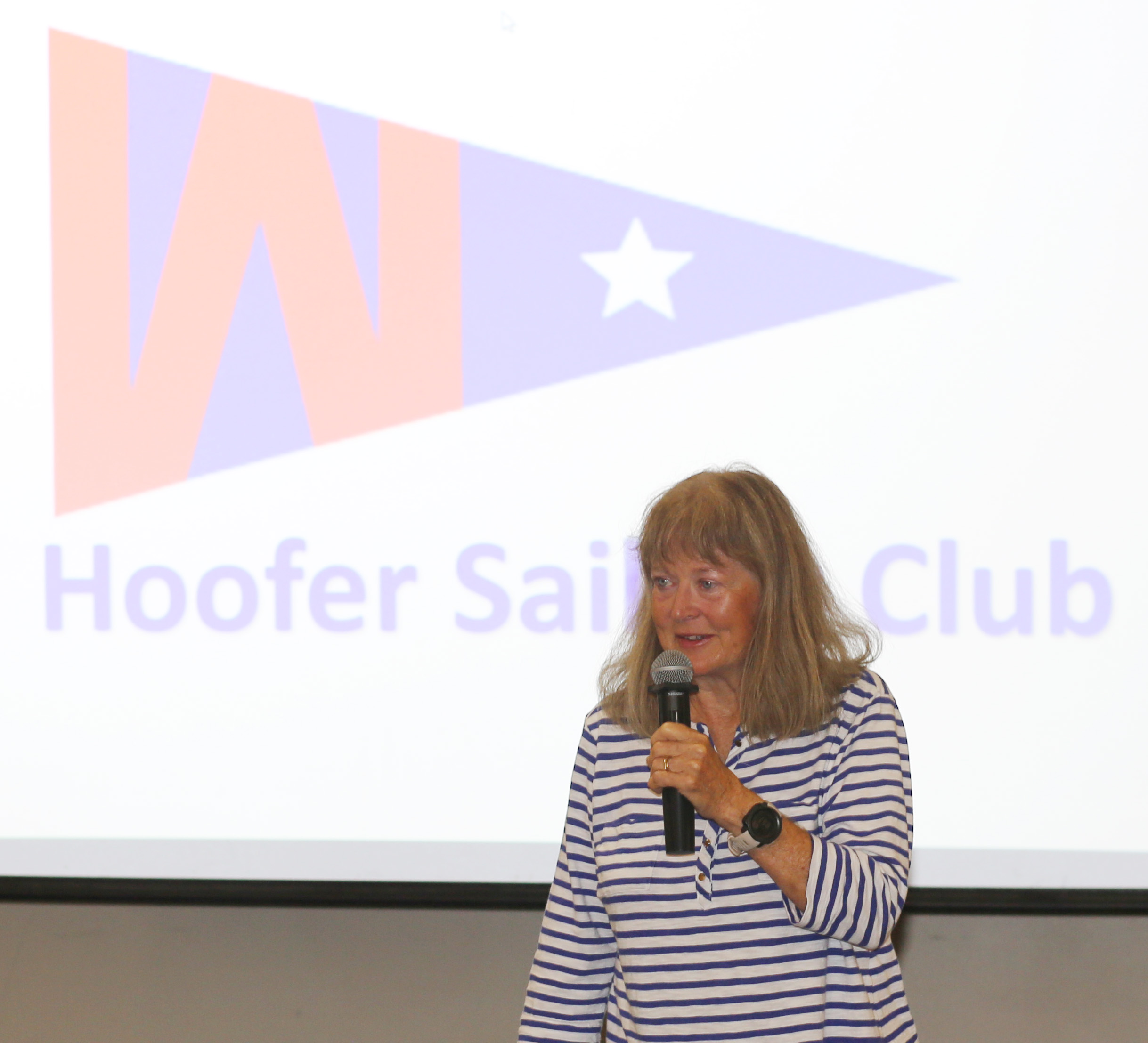
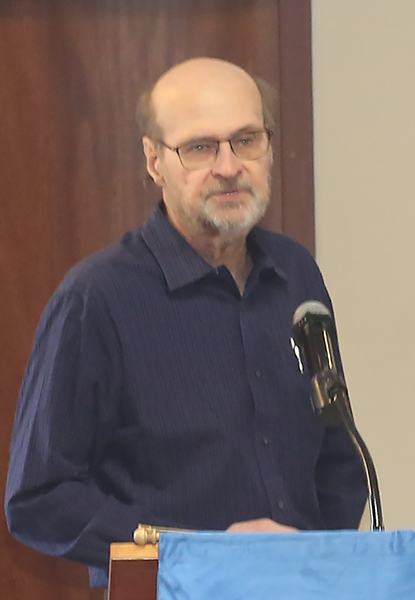
Credit: Dave Figi, and Ryan Lewis, photographs.
Note: Kiwanis and its members are not responsible for errors or omissions. We are open to discussion if you would like to request an alteration. This content may only be reproduced without alteration and with credit to the original author(s).
rev. 10-21-2025



Leave a Reply
You must be logged in to post a comment.