
Blackhawk Golden ‘K’ General Meeting
Minutes
June 17th, 2026
President Elect Tom Neumann presided, and called the meeting to order with a ring of the bell at 9:30AM.
Ray Szczepaniak led with the singing of America, the National Anthem, and the Pledge of Allegiance.
Invocation: Bob Knudson, mentioning rejuvenating rain and the children.
Raffle: Ray Szczepaniak oversaw the ticket sales and drawing this week.
The weekly pot was $14 and the big (Joker) pot was $155.
Greg Turco drew a ticket from the bucket, ticket number 599. Congratulations to the winner, Mel Lemirande.
The deck of cards has 42/53 cards remaining. Maury Frey drew the 4♥.
Tom Neumann thanks greeters Bruce Jourenby and Tom Neumann, invocator Bob Knudson, rafflemaster Ray Szczepaniak, and server Bob Knudson.
Happy Box: Luci Cramer announced she is happy because the Cramers spent the week with their nine-year-old grandson, going to two of his baseball games and playing soccer goalie for him at the park.
Roger Willeford announced he is happy because it is the Willefords’ 58th wedding anniversary.
Jim Farrell announced he is happy because it is the Farrells’ 29th wedding anniversary.
Jokes: Joker Roger Willeford had a good joke about what a duck says when he buys chapstick: “Put it on my bill.”
Joker Jenny Turco had a good joke about why the bike couldn’t stand up: “It was too tired.”
Joker Carl Cramer had a good joke.
Member Health: Tom Neumann had a status update on Gregg Dickinson, who is not attending because he has a cold.
Other Announcements: Tom Neumann spoke upon this past week’s Farmer’s Market was a success! Thank you to all booth staffers.
Luci Cramer spoke upon the upcoming club trip to Camp Wawbeek. The group leaves at 10:30, Thursday.
John Janes spoke upon etiquette during the club meeting. Silence those phones!
Committee Reports: Carl Cramer announced officer elections are next week. Will Greg Turco move to Vice President?
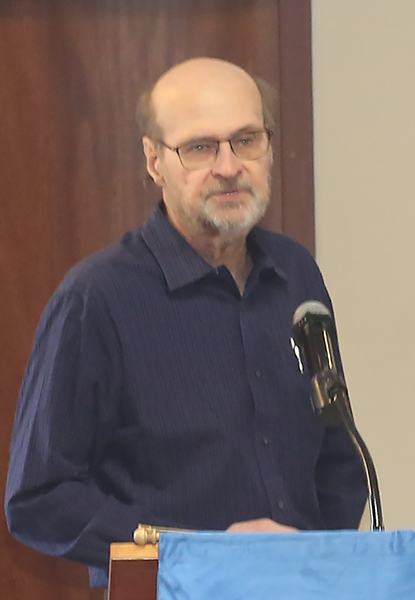
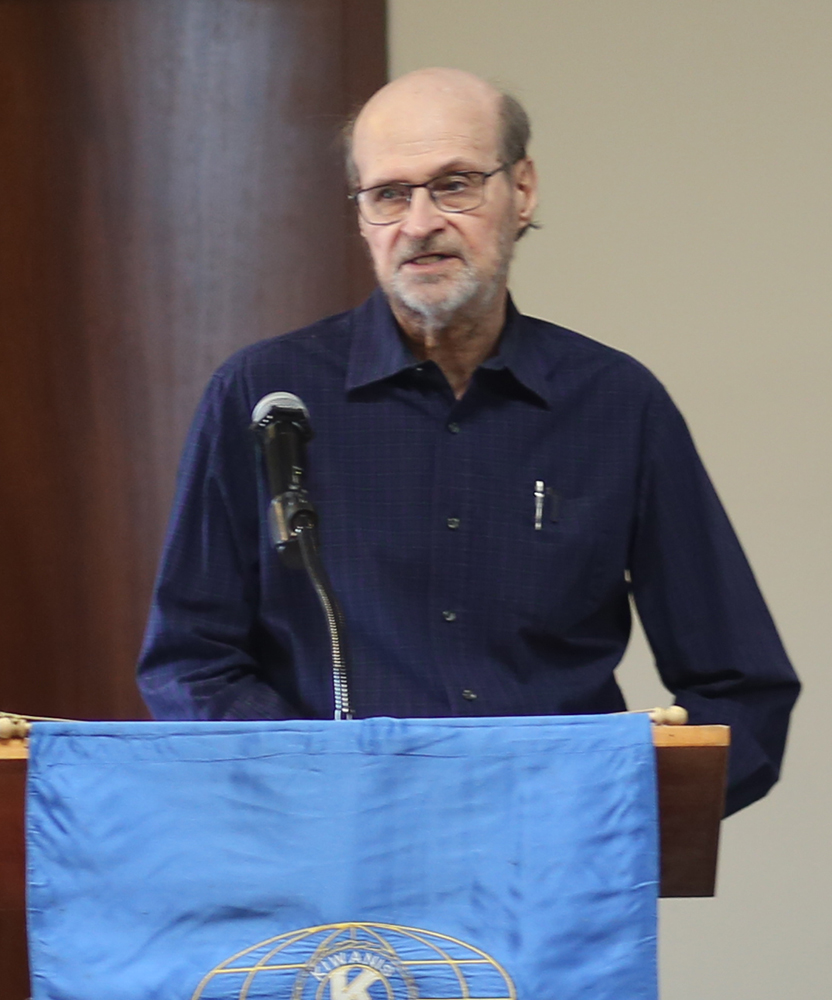
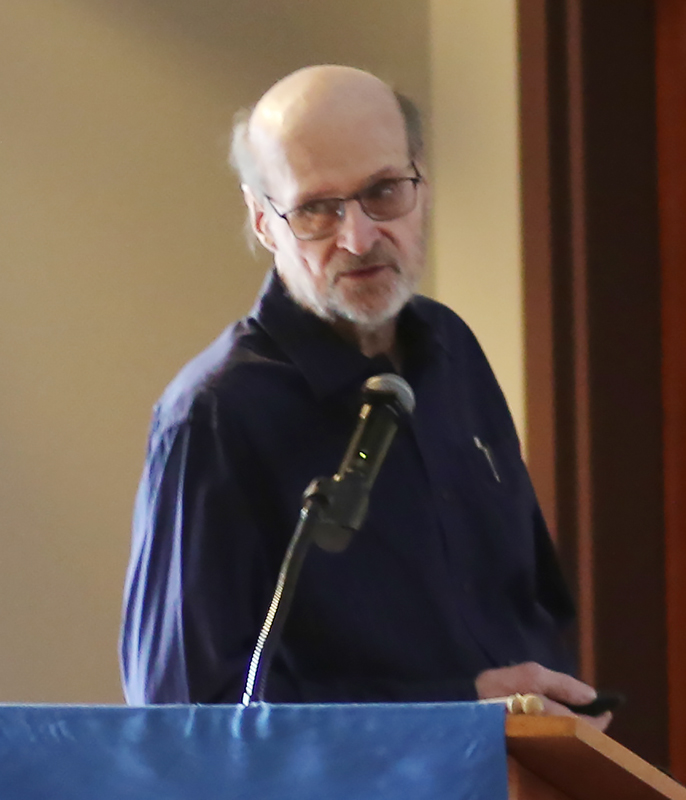
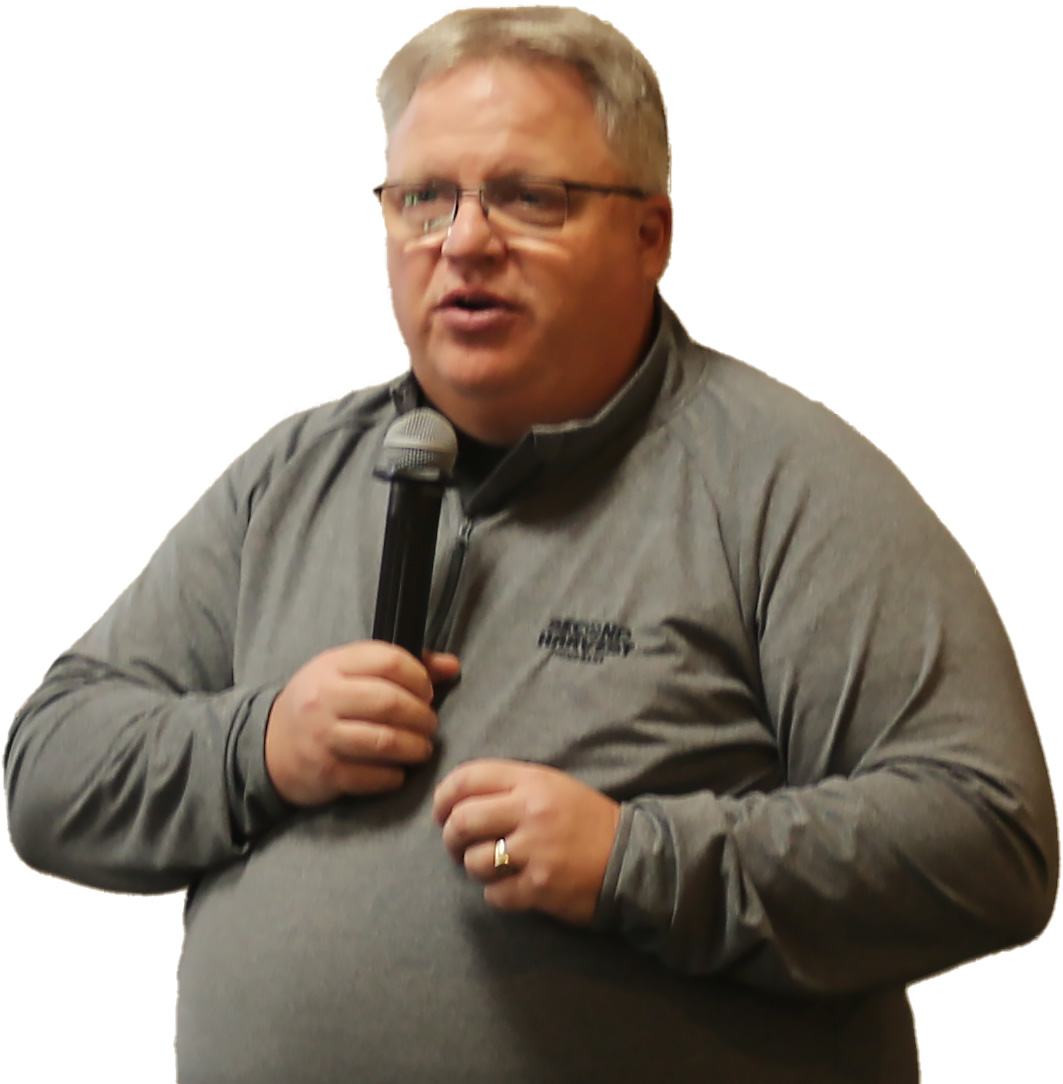
April Wright introduced the day’s speaker, Richard Snyder. Richard was told by Janesville city to raise $40,000 for restoration of the Oakhill Chapel before it is torn down in six months, which he accomplished. He assembled a team of many trade workers and other volunteers to completely restore the building and grounds.
Another $40,000 was raised selling stained glass windows, Richard’s specialty.
Kids from Janesville schools helped with six foot stained glass windows.

Years ago, the original pump organ was going to the dump. A Janesville citizen paid someone $5 to have it. A few years ago, someone was working for him, and saw it. After an agreement, the pump organ is now back in the chapel.
The chapel has sixty chairs that are replicas of the originals, recreated from solid maple, by Amish. An extra ten are available for purchase, with a name engraved on them.
The chapel has new 2.5” thick red maple doors.
An ornate design around the fountain was painted by group members. It was made with a solid metal cast.
The chapel is rented for $350/day, or $400 for weddings.

Kiwanis member John Janes asked, “What was the total investment?” Richard responded, “The then city manager Mark Freitag estimated the work value at $1.5 million. Richard and team estimated the investment at $282,000.

Kiwanian Mel Lemirande inquired, “Who owns the chapel?” Richard replied, “The city maintains ownership. Friends of Oakhill Chapel maintains it.”

Kiwanis member Jim Farrell asked, “Does the building contain a restroom?” Richard answered, “No. JP Cullen furnished a port-a-potty.” “Heating?” “Heating and A/C were installed after a fundraiser paid for them.”
Kiwanian April Wright inquired, “What is the seating capacity?” Richard answered, “Around sixty.”

The Friends of Oakhill Chapel group meets there for a meeting, every third Thursday at 10am. You are welcome to stop in and take a look.

John Janes asked, “How did you find the craftsmen?” Richard, “It was a large community effort. People eventually came to us!”
Kiwanis member John Sarnow inquired, “Did you track hours invested?” Richard replied, “Not directly. It is estimated 64,000 volunteer hours, which includes activities such as cleaning individual pieces of stained glass window with toothbrushes.”
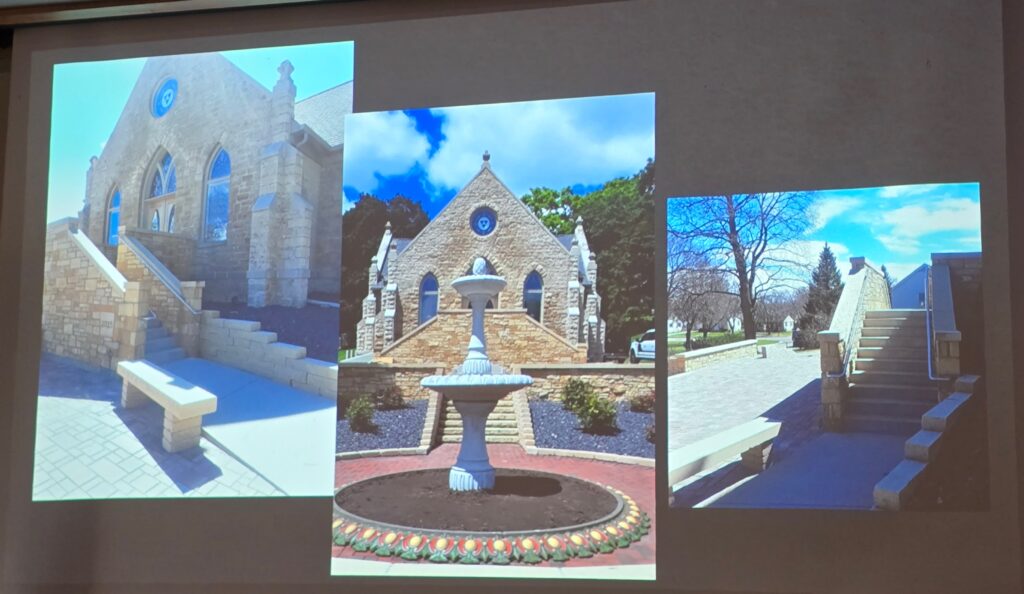
John Janes asked, “The exterior is bright. How?” Richard explained, “Hydrogen Peroxide is used. It will need to be done again soon.”
John Sarnow inquired, “How did you work with the city?” Richard said, “The 2014 city manager Mark Freitag had an active role.”

John Janes asked, “Please explain the window restoration.” Richard replied, “Start by labeling on clear plastic, every piece divided by lead. Number the glass and the lead seams. Disassemble and hand clean each. The chapel has 44 windows total, each requiring maybe 48 hours.”
Kiwanian Dale Henning stated, “The basement previously had a casket lift.” Richard responded, “Yes. It was lost to time. The chapel’s basement has a capacity of 300 caskets.”
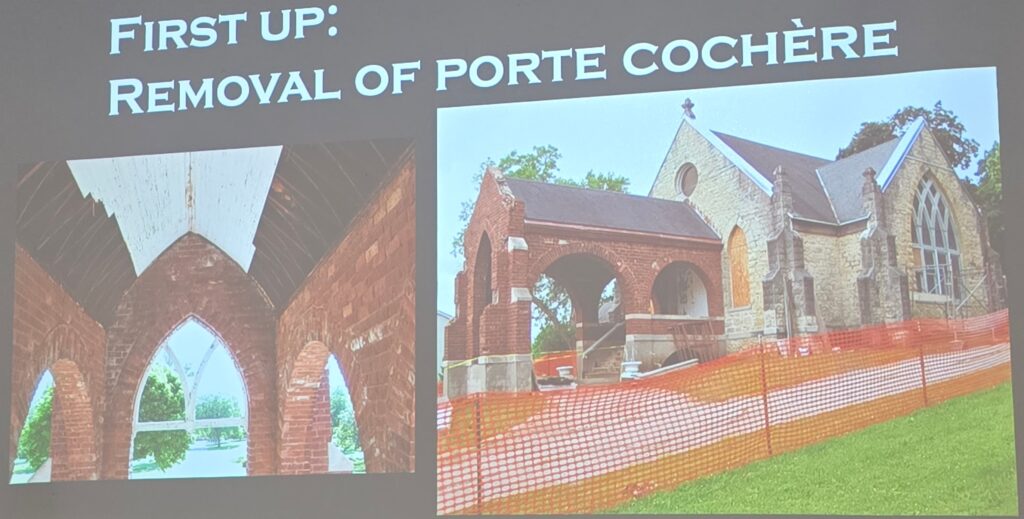
The red brick porch was added in 1912. It was constructed of cobblestone, from Washington Street.
John Janes asked, “[As a skilled glass worker,] do you believe the windows somewhere like Notre Dame can be reconstructed?” Richard offered, “Given photos, nearly anything can be accomplished. At Notre Dame, the problem is the fire burned so hot all of the lead melted.”

The presentation was well received and appreciated.
April Wright thanked Richard Snyder for speaking and presented him with a Kiwanis Parker pen.
Tom Neumann adjourned the meeting with a ring of the bell at 10:40AM.
Reminders: The Camp Wawbeek trip is next week!


On this day:
1631 Mumtaz Mahal dies during childbirth. Her husband, Mughal emperor Shah Jahan I, then spends more than 20 years building her tomb, the Taj Mahal
1824 US Bureau of Indian Affairs established
1837 Charles Goodyear obtains his first rubber patent
1856 Republican Party opens its first national convention as party members meet in Philadelphia
1863 Travelers Insurance Co of Hartford chartered (1st accident insurer)
1864 640m long ponton bridge over James River, Virginia finished
1885 The Statue of Liberty arrives in New York City aboard the French ship Isère
1898 The United States Navy Hospital Corps is established
1901 The College Board introduces its first standardized test, the forerunner to the SAT
1919 “Barney Google” cartoon strip, by Billy De Beck, premieres
1922 First flight across the South Atlantic Ocean arrives in Rio de Janeiro, Brazil, piloted by Gago Coutinho and Sacadura Cabral. First use of the sextant in air navigation.
1928 Amelia Earhart leaves Newfoundland to become the first woman to fly across the Atlantic as a passenger in a plane piloted by Wilmer Stultz
1943 Player-manager Joe Cronin of Red Sox hits two 3-run pinch home runs
1943 American pop singer and songwriter Barry Manilow, who specialized in elaborately orchestrated romantic ballads, was born.
1944 Iceland dissolves its union with Denmark and declares itself a Republic
1947 Pan Am Airways’ first round-the-world civil air service departs from New York City
1950 1st kidney transplant (Chicago)
1953 Most runs scored in 1 inning (17 by Red Sox)
1958 “Things Fall Apart” by Nigerian writer Chinua Achebe published by Heinemann – considered most widely read book in African literature
1958 The Wooden Roller Coaster opens at Playland in the Pacific National Exhibition in Vancouver, Canada, and remains open to this day
1960 Ted Williams hit his 500th HR
1962 US Open Men’s Golf, Oakmont CC: Jack Nicklaus wins his first major title by 3 strokes in an 18-hole playoff with Arnold Palmer
1963 Supreme Court rules against Bible reading/prayer in public schools
1965 British rock band The Kinks arrive in NYC beginning their first US tour
1969 Peter Schickele, Robert Dennis and Stanley Walden’s musical revue “Oh! Calcutta!” opens off-Broadway at the Eden Theatre, NYC; noted for it being performed almost entirely in the nude
1980 Columbia Records releases Bruce Springsteen’s fifth studio album “The River”; the 2-record set becomes a global smash, going top five in 8 countries
1982 US President Reagan’s 1st UN General Assembly address “We must serve mankind through genuine disarmament.”
1985 18th NASA Space Shuttle Mission (51-G): Discovery 5 launches
1988 Microsoft releases MS DOS 4.0
1988 Soyuz TM-5 launches
1991 South Africa abolishes last of its apartheid laws
Today we focus on staying healthy, by making sure to eat plenty of vegetables. The goal of the day is to eat vegetables at every meal, as well as for any snacks. Thankfully, this is easy to do, as there are many vegetables to choose from. Some common vegetables include potatoes, carrots, corn, peas, cucumbers, tomatoes, garlic, onion, broccoli, cauliflower, celery, zucchini, artichokes, beets, spinach, radish, beans, cabbage, lettuce, and ginger. There are two basic types of vegetables: one that is more starchy and higher in calories, and one that is more water-rich.
Vegetables have great versatility and can be eaten raw, or can be cooked, boiled, steamed, baked, or dried—and more. They are highly nutritious and contain vitamins, minerals, fiber, and phytonutrients. Eating them can help reduce the risk of obesity, diabetes, and some cancers. Eating them also boosts the immune system, regulates metabolism, protects the heart, regulates blood pressure, helps skin and bones, and helps with gut health, among other things. Doctors recommend eating at least five servings a day, which can easily be accomplished on National Eat Your Vegetables Day.
World Croc Day is “a global awareness campaign to highlight the plight of endangered crocodiles and alligators around the world.” Crocodiles and alligators are celebrated and there is hope the day will encourage people to get involved in helping them. World Croc Day was organized by the Crocodile Research Coalition in conjunction with the Belize Zoo. During past celebrations, events have been held at the zoo and the day has been marked around the world.
While the holiday takes on the name of crocodiles, it is for alligators as well. This makes sense, as the animals are similar in a number of ways. They both are large reptiles from the order Crocodilia that have short legs, powerful tails, long snouts, and bony-plated backs. But they have differences, too, and there are ways to tell them apart. One of the most notable differences is their snouts: alligators have broad and rounded U-shaped ones, while those of crocodiles are narrow and pointed like a V. When alligators have their mouths shut, their bottom teeth can’t be seen. But when crocodiles close their mouths, some of their bottom teeth are visible. There tends to be a color difference between the two reptiles. Alligators are gray or black, while crocodiles tend to look more olive, gray-green, or tan. Crocodiles usually live near saltwater, while alligators make their homes near freshwater. Lastly, crocodiles are more aggressive than alligators—and more likely to attack humans. Alligators usually don’t attack humans unless they feel threatened.
Minutes by Ryan Lewis.
Credit: Dave Figi, and Ryan Lewis, photographs.
Note: Kiwanis and its members are not responsible for errors or omissions. We are open to discussion if you would like to request an alteration. This content may only be reproduced without alteration and with credit to the original author(s).
rev. 10-21-2025


Leave a Reply
You must be logged in to post a comment.