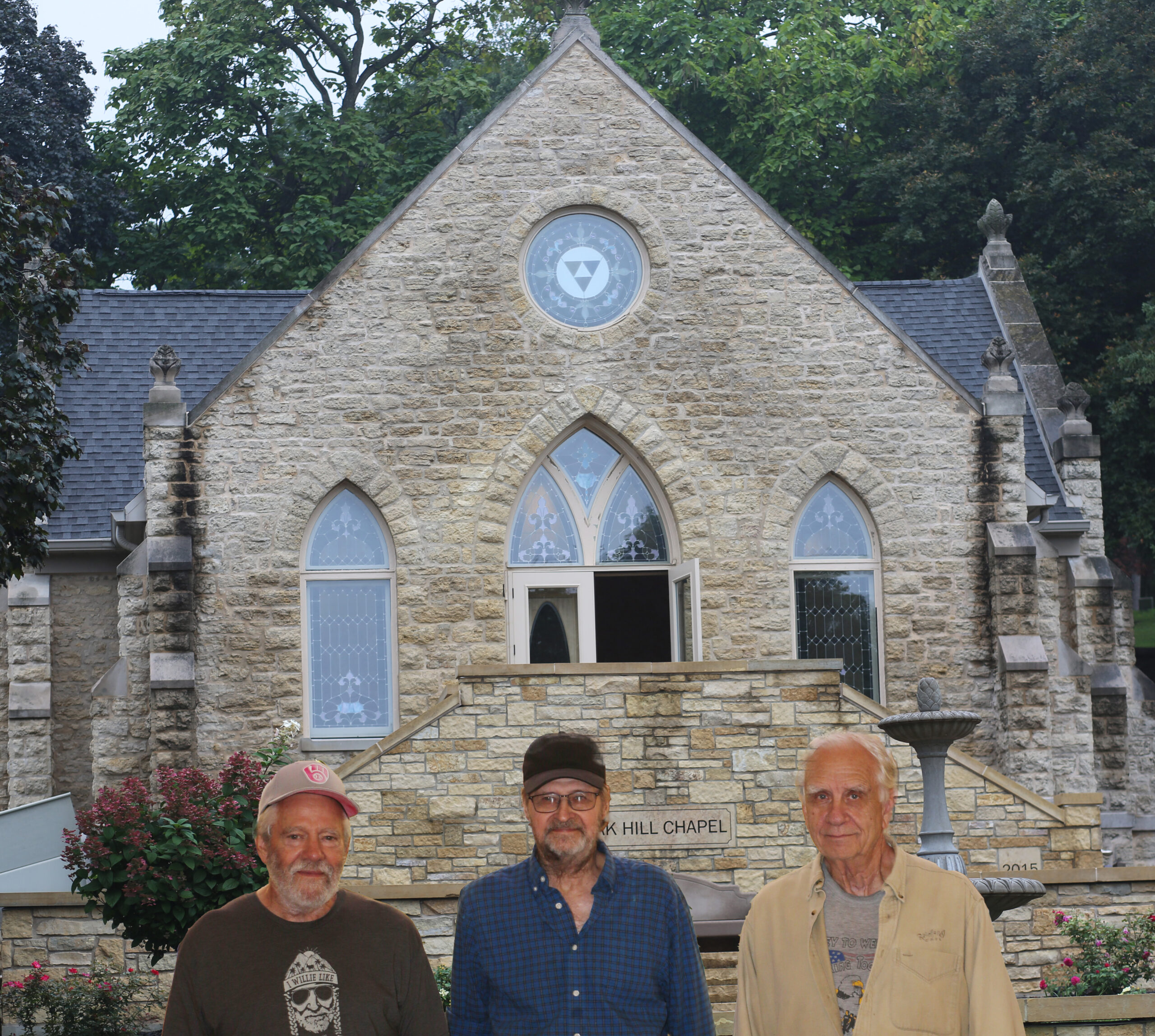

Blackhawk Golden ‘K’ General Meeting
Minutes
August 19th, 2026
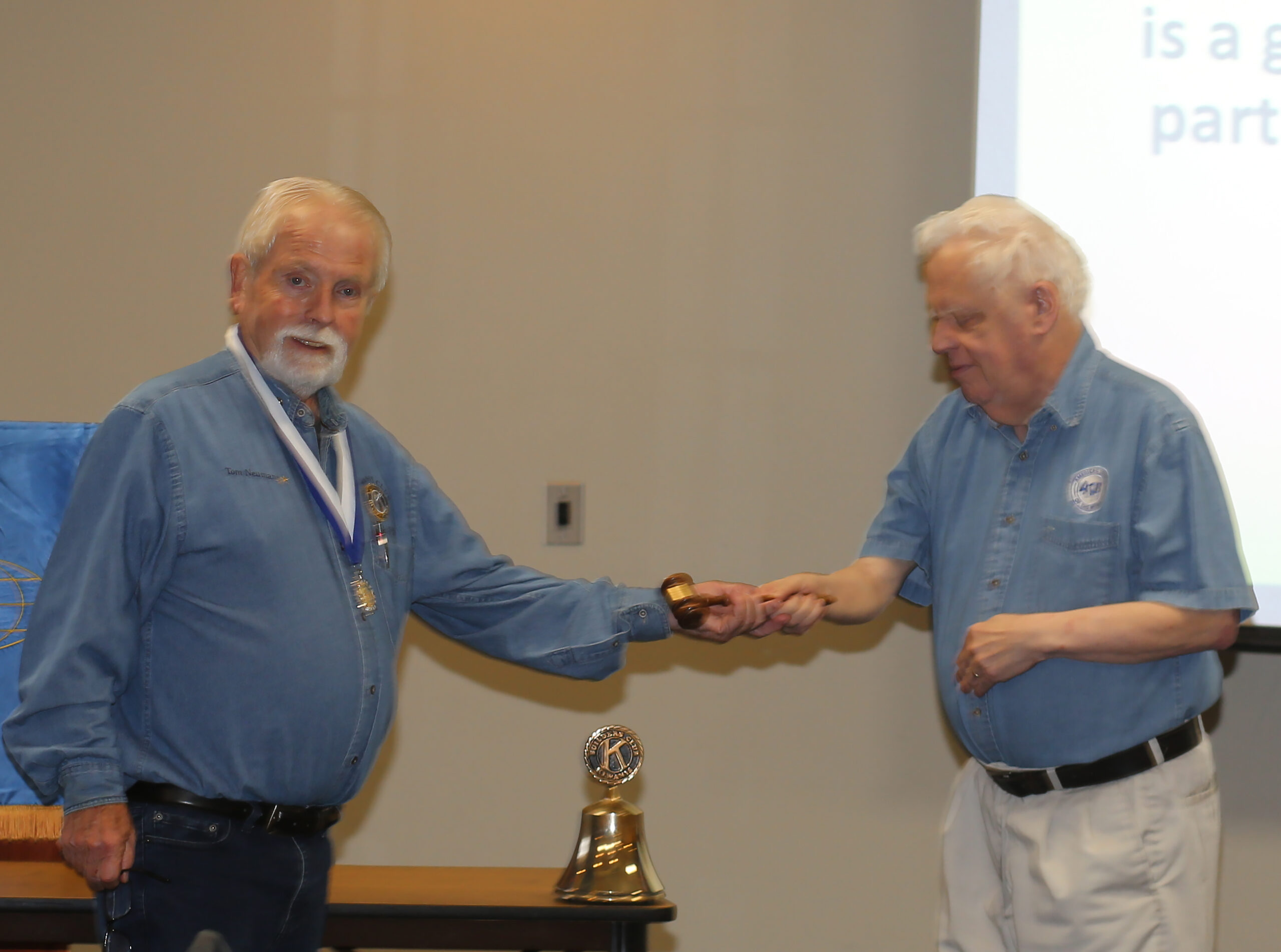
President Richard Johnson presided, and called the meeting to order with a ring of the bell at 9:30AM.
Richard Johnson led with the singing of America, the National Anthem, and the Pledge of Allegiance.
Invocation: Bob Knudson, mentioning the energy to help and friends in Kiwanis, and the children.
Raffle: Ray Szczepaniak oversaw the ticket sales and drawing this week.
The weekly pot was $15 and the big (Joker) pot was $279.
Tom Neumann drew a ticket from the bucket, ticket number 6025. Congratulations to the winner, Richard Johnson.
The deck of cards has 33/53 cards remaining. Richard Johnson drew the 3♣.
An additional ticket 6040 was drawn by Richard Johnson for April Wright to win a selection of freshly cut flowers.
April Wright announced that she invited the guest. April’s friend Vicky is attending.
Hamish Martin is with us again today.
Jokes: Joker Steve Skelly had a good joke.
Member Health: Linda Bontly had a status update on a member’s wife, who passed away.
Other Announcements: Tom Neumann and April Wright spoke upon their recent return from the Kiwanis District Convention. We received an award(!) for the net gain of three members in our club. We are one of the largest clubs in our district. The District mentioned that the district would like the Smoke Signal sent to the District Administrator, monthly.

John Janes read an excerpt from a ‘Thank You’ letter, sent by the Rotary Botanical Gardens. Rotary and sending ten children scholarships to ‘Art Camp’ as a result of Kiwanis contributions.
Committee Reports: Tom Neumann announced the Buckley Picnic is costly, and might best be combined with the officer inductions. John Janes offered, we might go back to having the Buckley Picnic be a potluck. The decision was made to have September 30th be both.
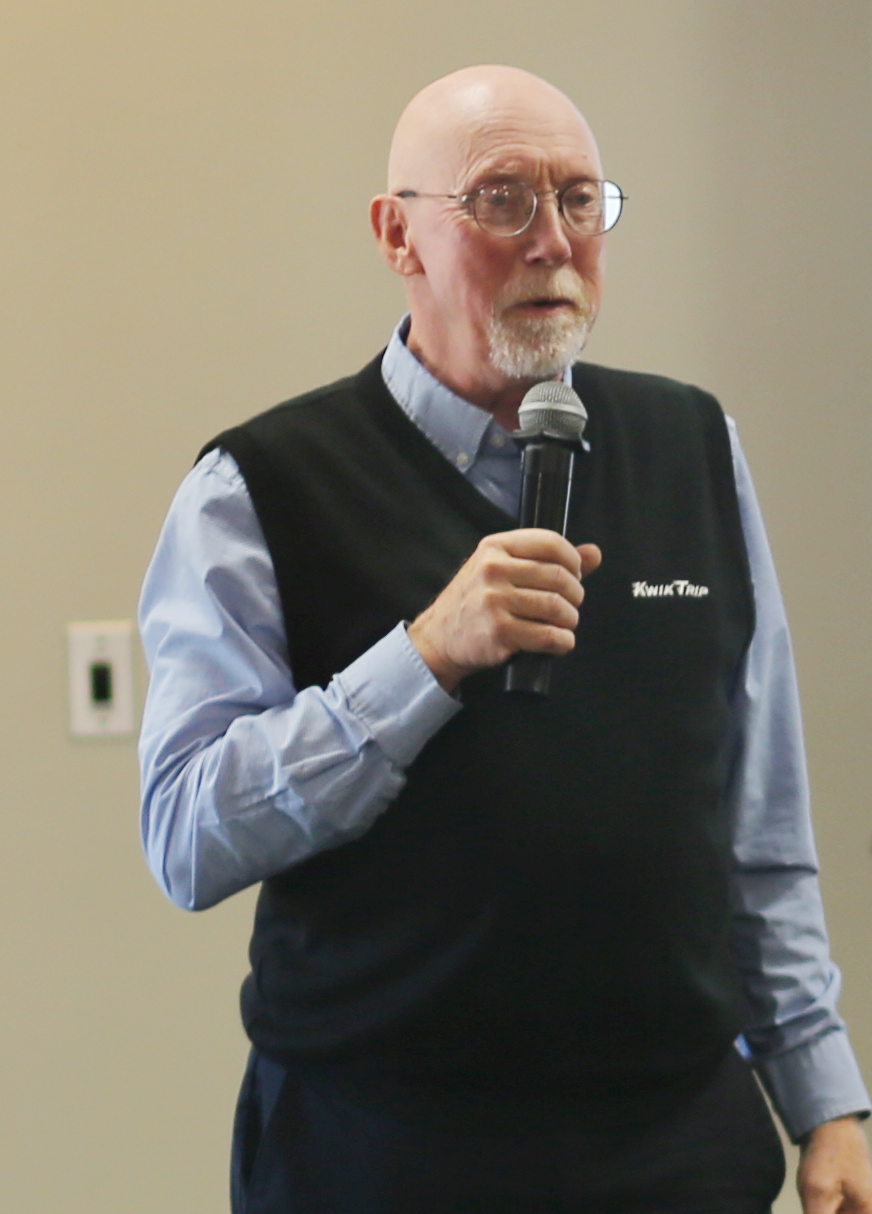
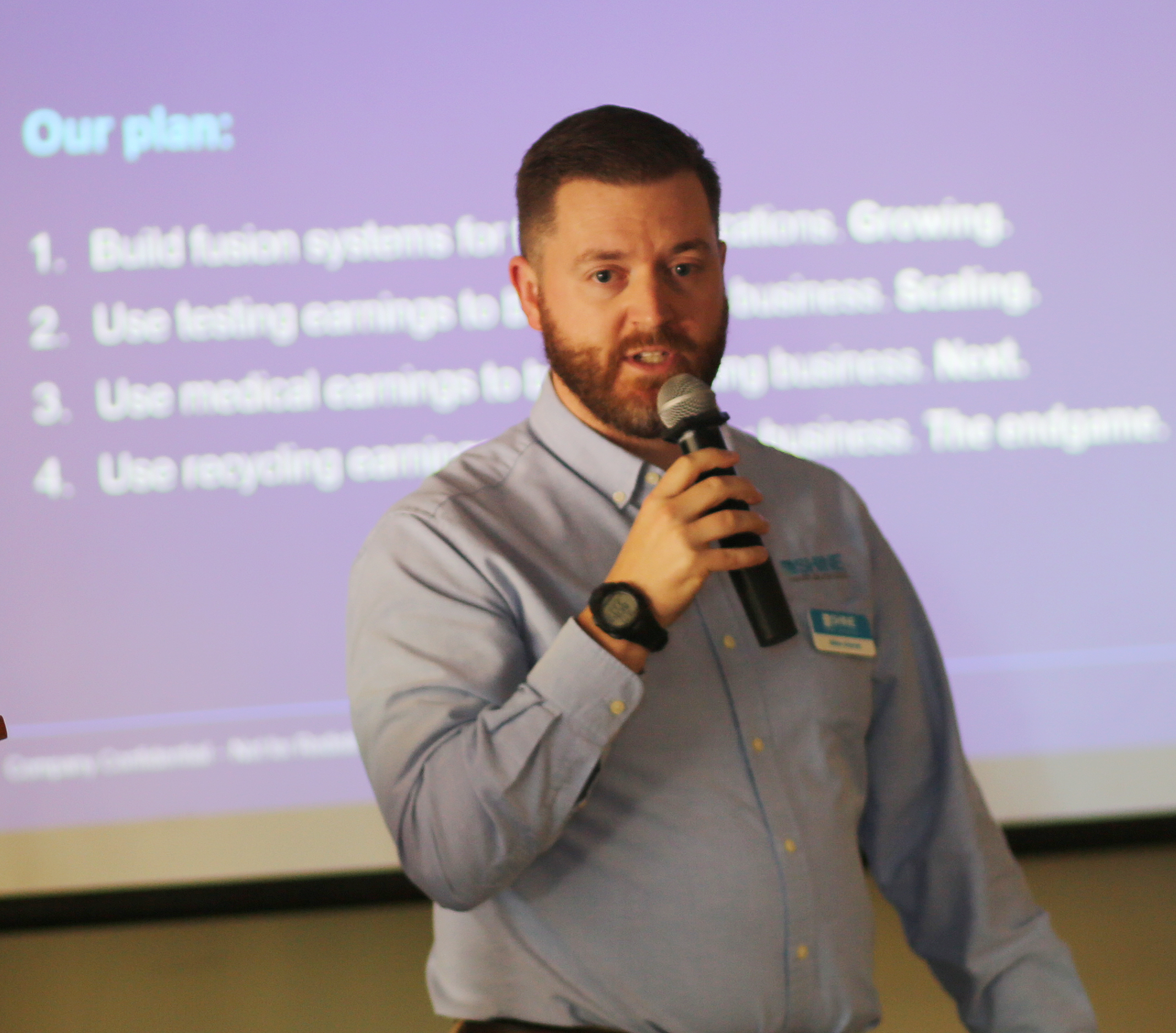
Maury Frey introduced the day’s speaker, Hanna Van, Sr. Director and Heidi Neeley, Program Director of the Alzheimer’s Association. Heidi is here to speak to us about Alzheimer’s and other dementia-related disorders, and the advances in technology for diagnosis, treatment and care of those affected by a cognitive disease.

Heidi started off by telling us the organization’s symbol is a head and a beaker.

Heidi works with the University of Wisconsin’s 100+ different labs. She educates about Alzheimer’s, Huntington’s, any other type of dementia, and other diseases.
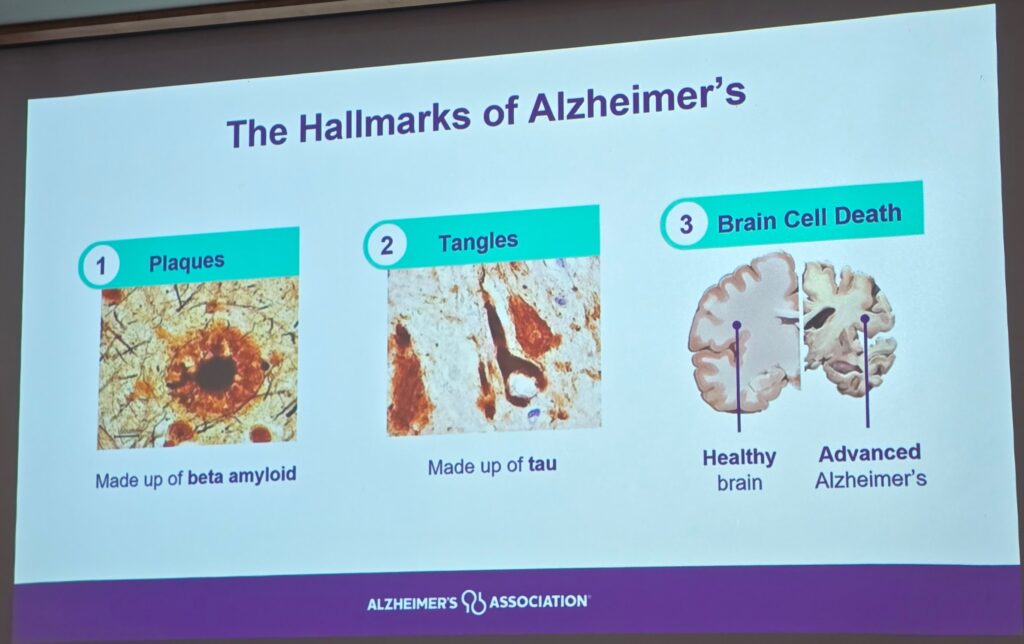
She detailed a new app for the newly diagnosed. It features videos, information, and resources. It is named My ALZ Journey.
Nearly 500 million people in 59 countries are researching.

Medicare and Medicaid need to fund blood tests for early detection.

The organization has quarterly and weekly newsletters.

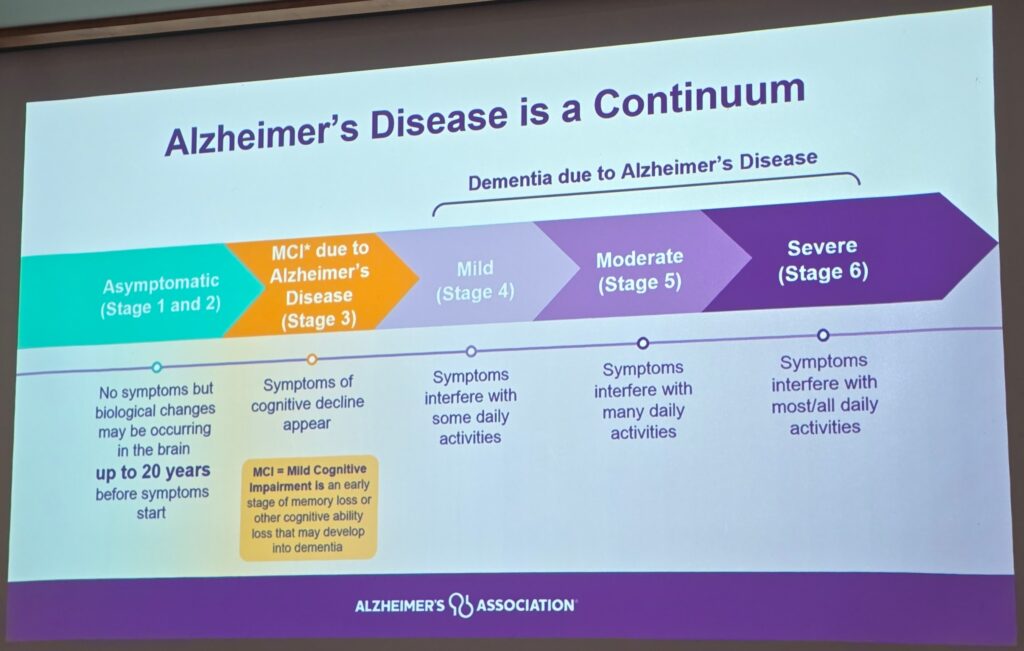
The hallmarks of Alzheimer’s include indications present 20 years in advance.
Kiwanis member Jenny Turco asked, “How does diet assist and affect the diseases?” Heidi responded, “Berries, nuts and low sugar are definitely positive. Look up the Mind Diet.
Kiwanian Jim Farrell asked, “When should sufferers be moved to a 24-hour care facility?” Heidi responded to part of the question with, “That is a complicated decision.” Later, “You can try YouTube, Dr. Natalie with the Care Blazers.”
Kiwanis member Tom Neumann asked, “What financing is available for treatment?” Heidi responded that it can be difficult. Start with the county’s dementia care specialist, and look to the Aging and Disability Resource Center (ADRC).”
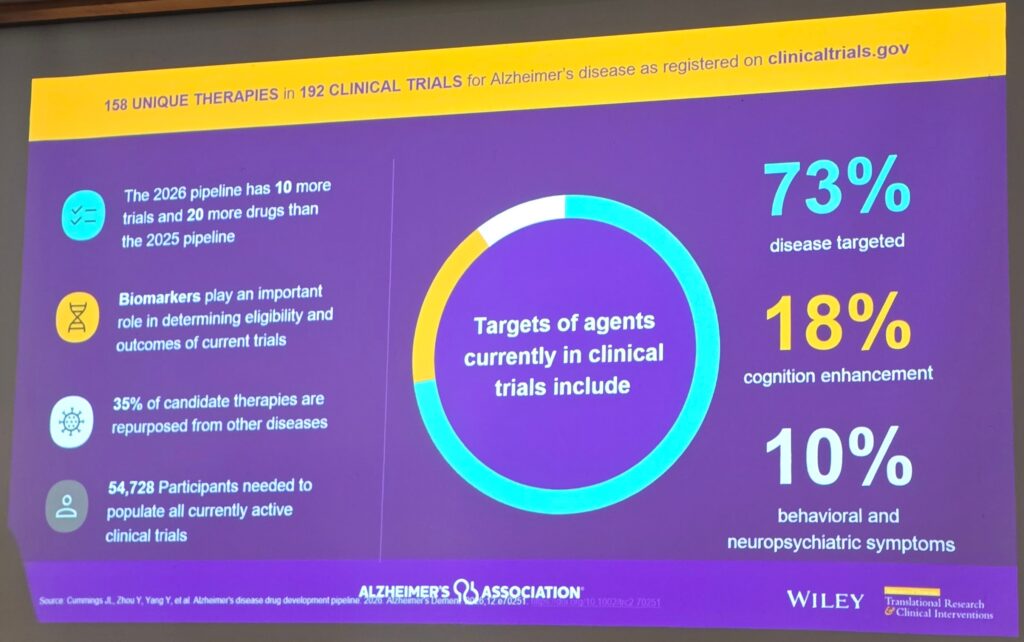
Research is working on a retinal test in lieu of the current $7,000 PET scan.
(Green are previously approved and repurposed)
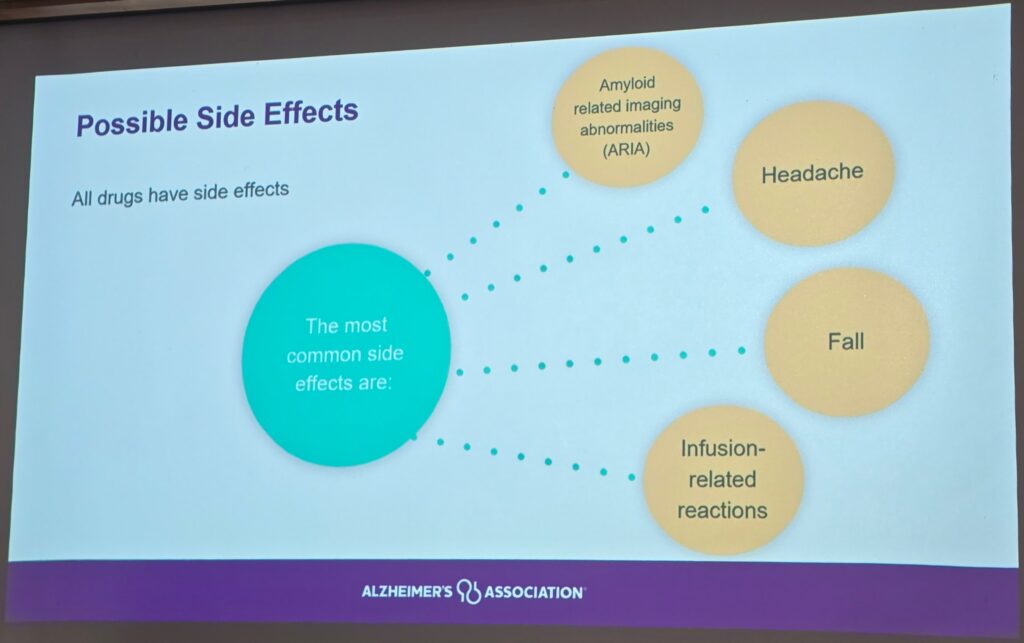
ARIA is a swelling of the brain.
The Alzheimer’s Association International Conference just occurred in London. It included news about the previously only administered at two locations in the state infusion called Leqembi that is now soon to be subcutaneous.
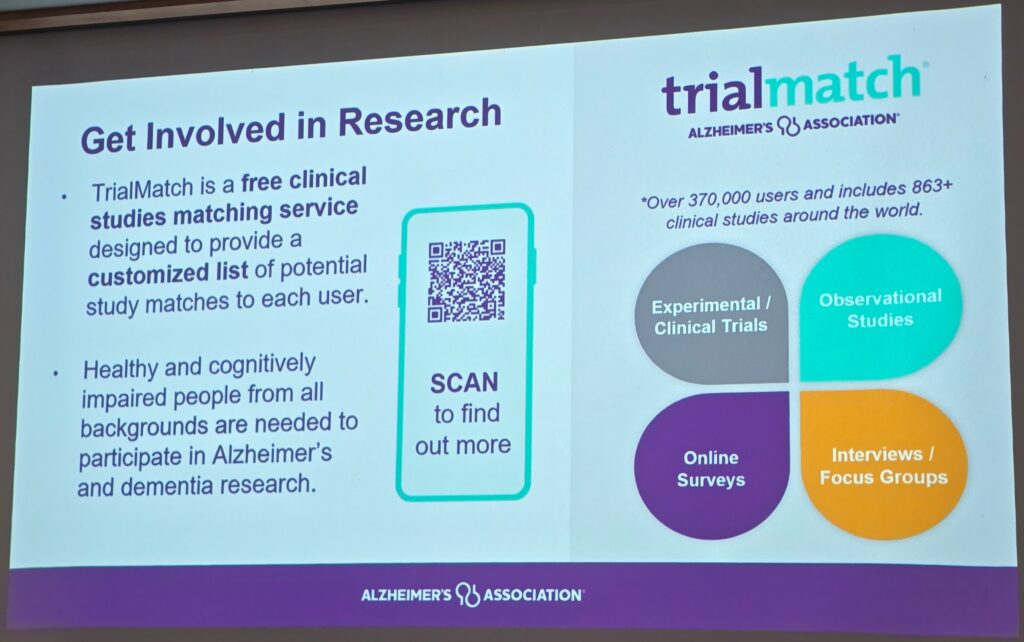
Heidi encouraged everyone to look to trialmatch.org. Currently, nearly 55,000 people are needed.
Everyone was encouraged to look into “Rethink Your Brain,” which is a personalized plan to strengthen your brain.

It is to everyone’s benefit to use Medicaid to have a beta amyloid test.
Heidi and Hannah’s presentation was well received and appreciated.
Maury Frey thanked Hanna Van and Heidi Neeley for speaking and presented them with a Kiwanis Parker pen.
Richard Johnson adjourned the meeting with a ring of the bell at 11AM.
Reminders: There is an executive board meeting next week.
On this day:
43BCE On this day in 43 bce, a 19-year-old became one of the most powerful people in the Roman Republic. He was Gaius Julius Caesar Octavian (later known simply as Octavian [until the date when he assumed the designation Augustus]), and he had just ascended to the rank of consul—one of two Roman heads of state, the highest magistrates and officials in the land. His rise to power was rapid, and he would dramatically change the face of Rome.
1665 The world’s “most mysterious book,” a codex known as the Voynich manuscript and written in an unknown script, is sent by the rector of Charles University in Prague to a Jesuit scholar (now in Yale University’s Beinecke Library and still undeciphered)
1848 New York Herald is the first major eastern newspaper to report the discovery of gold in California
1883 French fashion designer Coco Chanel—who, with her elegantly casual creations, ruled over Parisian haute couture for almost six decades—was born
1886 Carlisle Graham survives his second ride in a barrel down Niagara Falls, although the barrel broke and he had to swim some, and permanently lost hearing in one ear
1887 Dmitri Mendeleev makes a solo ascent by balloon to an altitude of 11,500 feet (3.5 km) above Klin, Russia, to observe an eclipse
1921 Detroit’s Tiger Ty Cobb is the fourth and youngest player to achieve 3,000 hits against the Boston Red Sox
1934 The first All-American Soap Box Derby is held in Dayton, Ohio
1957 US Major David Simons reaches 30,933 meters in a balloon
1959 Satellite Discoverer 6 is launched into polar orbit
1960 American CIA pilot Francis Gary Powers is convicted of spying by the USSR (U-2 incident) and sentenced to 3 years in prison plus 7 in a labor camp; he serves 17 months before being exchanged for a captured Soviet KGB spy
1960 New England’s first commercial atomic energy reactor, owned by the Yankee Atomic Electric Company, achieves a self-sustaining nuclear reaction in Rowe, Massachusetts
1967 The Beatles’ “All You Need Is Love” single goes to #1
1974 RCA Records releases “Pussy Cats,” the tenth album by American singer Harry Nilsson in the US; the album is produced by John Lennon, and Nilsson works through a serious vocal cord injury that diminishes his acclaimed range
1979 “My Sharona” by The Knack hits #1 and stays at the top for 6 weeks
1979 Soviet Cosmonauts Vladimir Lyakhov and Valery Ryumin return to Earth aboard Soyuz 34 after a record 175 days in space
1981 American athlete Renaldo Nehemiah runs the 110m hurdles in world record time of 12.93 seconds in Zurich, Switzerland
1985 Japan launches Suisei, the country’s second probe of Halley’s Comet
1993 Dow Jones Industrial Average hits record high of 3612.13
1993 Mattel and Fisher-Price toy companies merge
1994 American theoretical physical chemist Linus Pauling—the only person to have won two unshared Nobel Prizes (Chemistry, 1954; Peace, 1962)—died at age 93
1997 STS-85 (Discovery 23) lands
‘Black Cow’ Root Beer Float Day Today we celebrate the black cow, which in many locations is simply another name for a root beer float—a drink consisting of root beer and vanilla ice cream. They are sometimes called chocolate cows or brown cows when chocolate ice cream is used in place of vanilla. In some locations, a black or brown cow is made with cola instead of root beer. In other locations, root beer and ice cream are mixed together, instead of the ice cream sitting on top.
Frank J. Wisner, the owner of Cripple Creek Brewing in Colorado, made the first black cow on today’s date in 1893, after observing the snow caps of Cow Mountain the night before, and thinking they looked like ice cream scoops on top of soda. The first drinks were made by combining Myers Avenue Red root beer and vanilla ice cream. He soon began making the drink using cola. The drink became known as the Black Cow Mountain drink, and it is said that children shortened the name to the black cow.
National Hot and Spicy Food Day This day is dedicated to hot and spicy foods. Some hot foods include wasabi and horseradish, and some spicy foods are made with peppers that have a high capsaicin content. There is some information that suggests capsaicin is good for your health, and you can read about that here and here. Peppers with a higher capsaicin content are higher on the Scoville scale. Take a look at where different peppers and hot sauces are located on the scale.
National Potato Day Potatoes, whose name comes from the Spanish word patata, are one of the most common vegetables and most important crops in the world. They are part of the nightshade family and are tubers, a swollen part of a stem that provides nutrients for the leafy part of the Solanum tuberosum plant. Potatoes are almost always eaten cooked, not raw, and most are eaten processed—many being bought frozen in bags—instead of being made fresh. Some of the many ways they are prepared are as baked potatoes, mashed potatoes, boiled or steamed potatoes, french fries, steak fries, waffle fries, home fries (American fries), hash browns, and potato chips. They are celebrated today in their many forms with National Potato Day.
First cultivated in South America sometime between 5,000 and 7,000 BCE, in the area that is now southern Peru and northwest Bolivia, potatoes were brought back to Europe in the sixteenth century. Scotch-Irish immigrants were the first to bring them to North America, introducing them to New Hampshire in 1719, and from there they spread across the continent. Today potatoes are grown in all 50 states of the United States, with the largest producing state being Idaho. Common varieties of potatoes are red, white, yellow, purple, Russet, fingerling, and petite.
Minutes by Ryan Lewis.
Credit: Dave Figi, and Ryan Lewis, photographs.
Note: Kiwanis and its members are not responsible for errors or omissions. We are open to discussion if you would like to request an alteration. This content may only be reproduced without alteration and with credit to the original author(s).