
Blackhawk Golden ‘K’ General Meeting
Minutes
May 13th, 2026
President Elect Tom Neumann presided, and called the meeting to order with a ring of the bell at 9:30AM.
Tom Neumann led with the singing of America, the National Anthem, and the Pledge of Allegiance.
Invocation: Dave Calverley, mentioning the children.
Raffle: Ray Szczepaniak oversaw the ticket sales and drawing this week.
The weekly pot was $16 and the big (Joker) pot was $116.
A ticket was drawn from the bucket, ticket number 400. Congratulations to the winner, Dick Fay.
The deck of cards has 45/53 cards remaining. Dick Fay drew the 7♣.
Tom Neumann thanks greeters Dave Figi, invocator Dave Calverley, rafflemaster Ray Szczepaniak, and server Bob Knudson.
Happy Box: Dick Fay announced he is happy because he won the raffle, and is donating the proceeds to the Truck on Ice!
Jokes: Joker Dick Fay had a good joke about a man with a woman’s name in his jacket, whose partner hits him, and is then told, “Oh, its just a horse at the track!” Next week, she hits him much harder, revealing, “Your horse just called.”
Member Health: Tom Neumann had a status update on Dan Heerey, who is in Florida for another week and unable to speak due to having suffered a minor stroke.
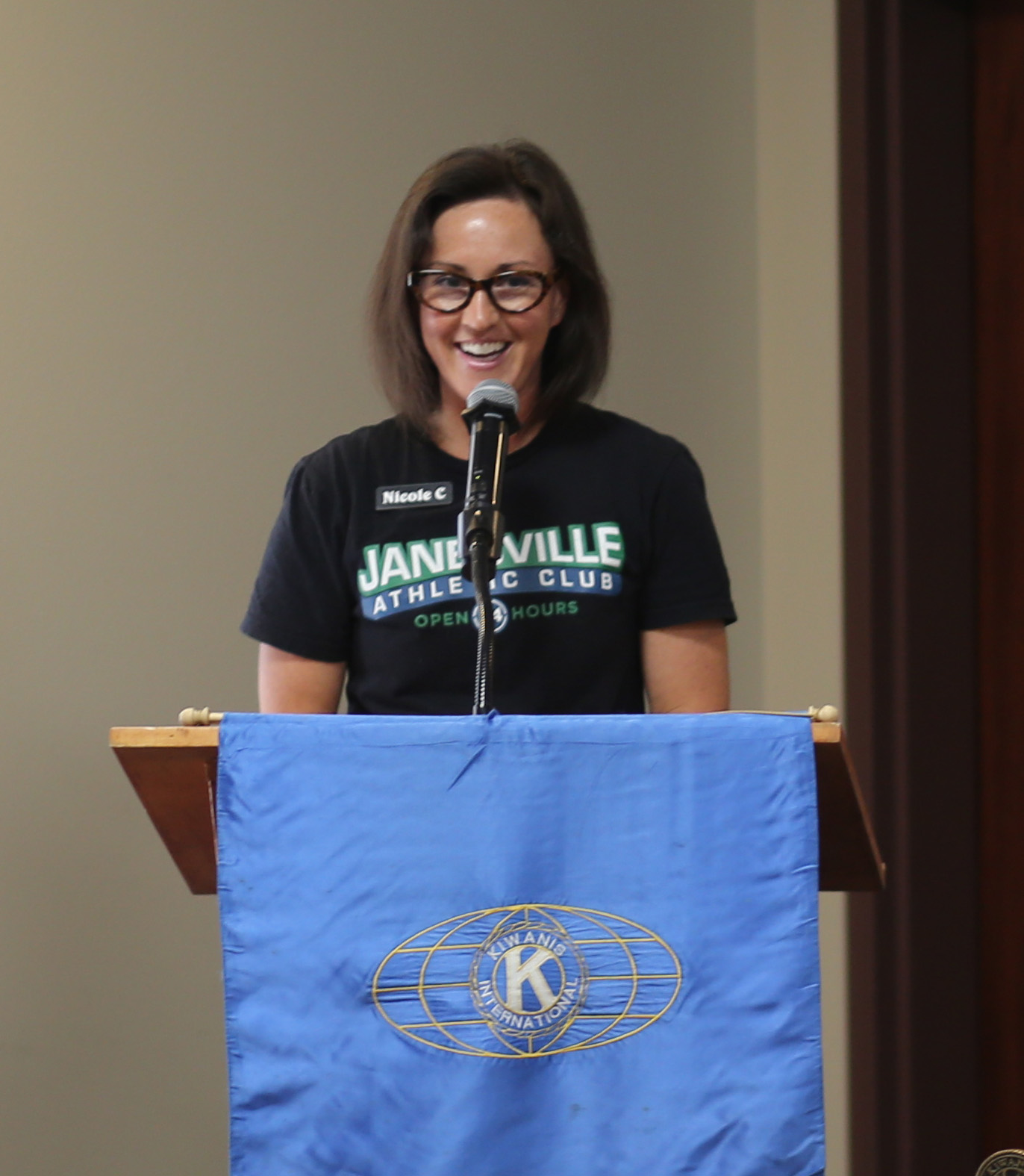
Other Announcements: John Janes spoke upon the Renaissance Faire, which is this weekend!
Committee Reports: Tom Neumann announced we will meet at Oak Park Place next weekend(!).
Tom Neumann announced a new version of the flag box was provided, and members liked it.
Tom Neumann announced that on Friday, Kiwanians will golf with a Boys’ and Girls’ Club charity event.
John Janes announced that the Tree Sale earned $4,400! There are 700 remaining trees to be sold.
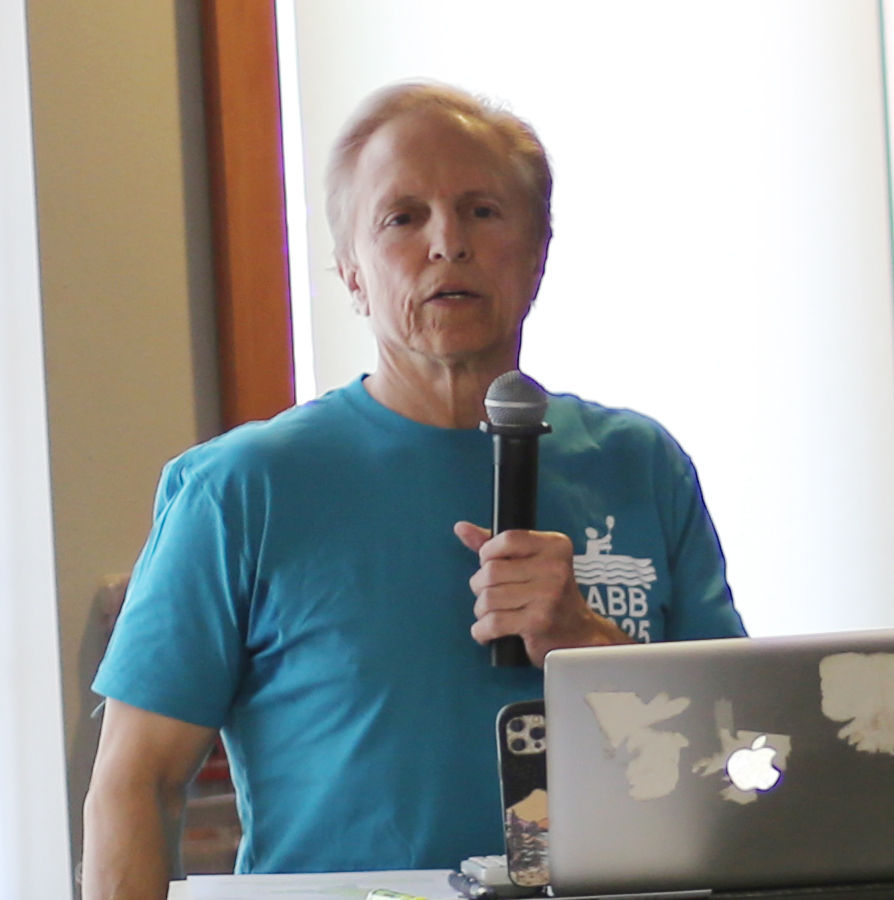
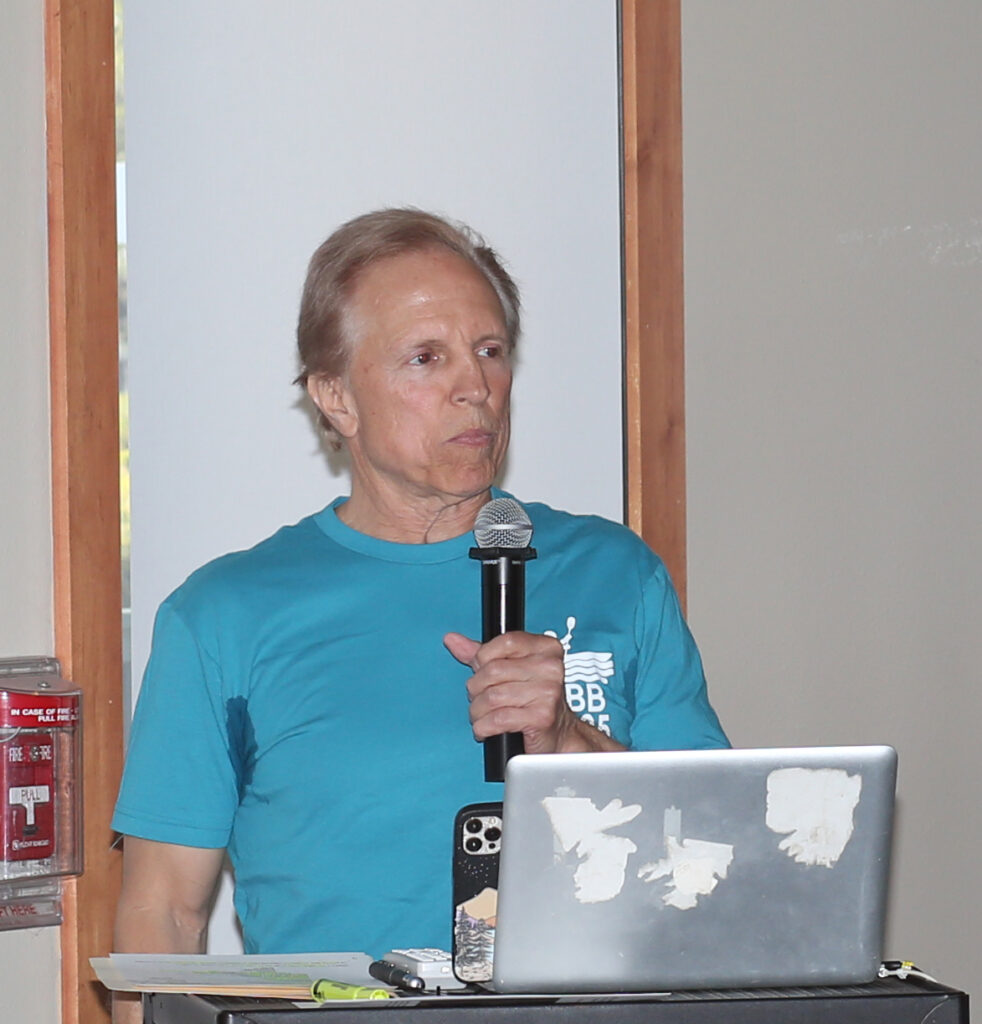
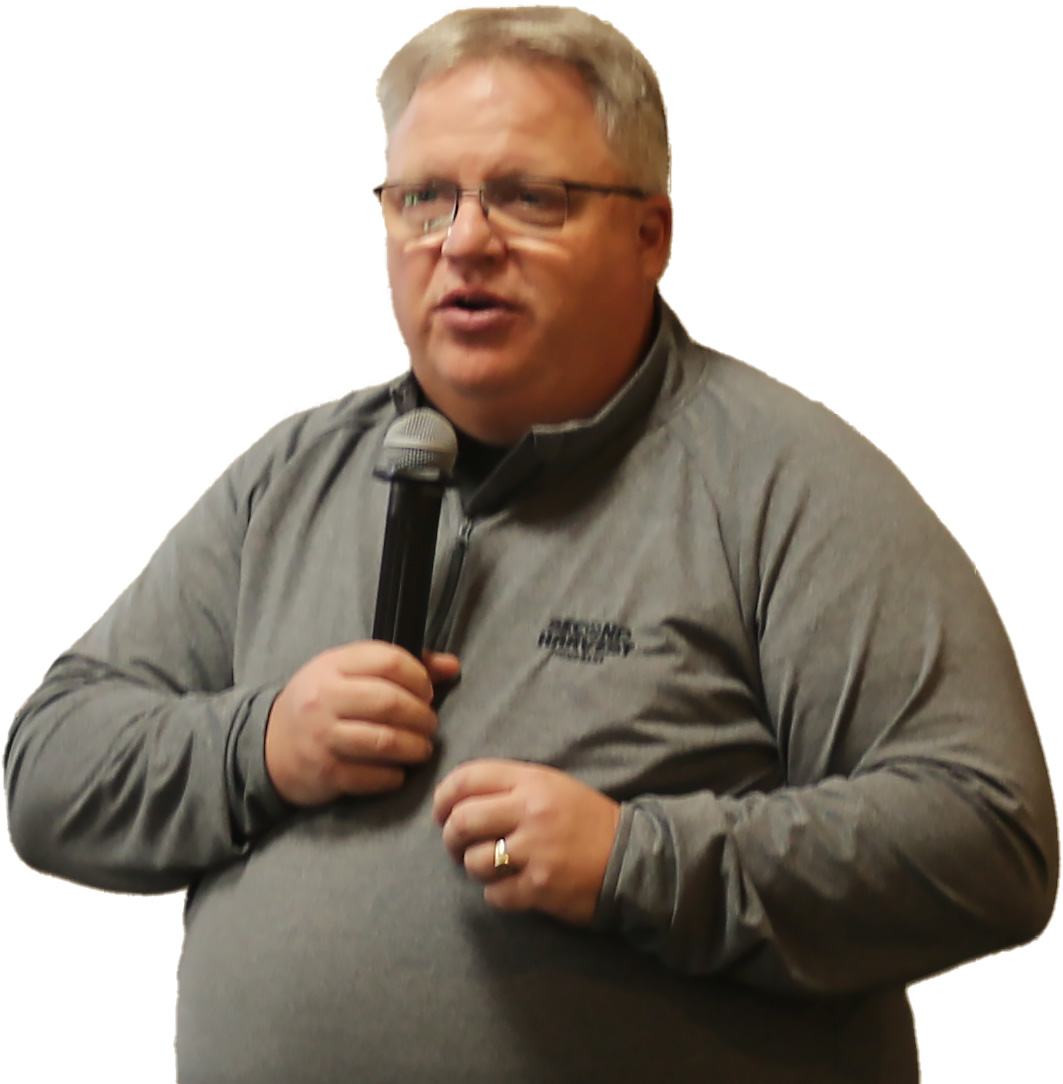
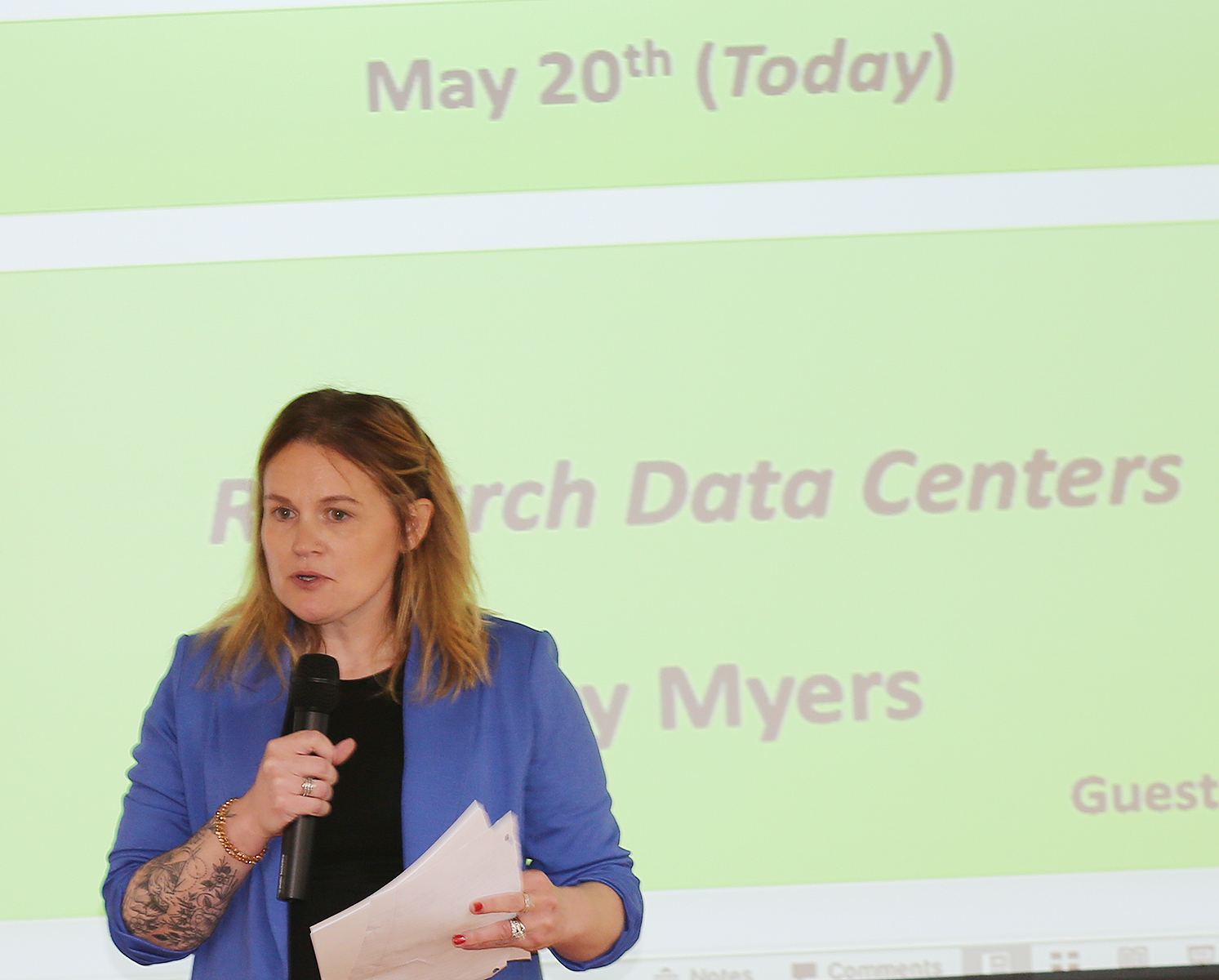
Ryan Lewis introduced the day’s speaker, Rich Bostwick. Rich is a lifelong Janesville resident who likes to be an active member of society. He is a member of many civic groups, including Rockport Park, Friends of Rock River Heritage Park, Janesville Urban Forestry Alliance (JUFA), Vets Roll, Rock County Anti-Human Trafficking Task Force, The GIFTS Men’s Shelter, and Meals on Wheels. Likely best known for his ongoing tenure on the Rock County Board – twenty years, elected vice chair twice and chair twice. Rich’s favorite summer endeavor is his two summer youth paddling classes he founded and continues to teach: Blackhawk Boaters, and Advanced Blackhawk Boaters. Over the years, he has had the pleasure of instructing many students in the skill of canoeing and kayaking. Rich is happy to share his experiences with Kiwanis today.
First question: Are canoeing and kayaking dangerous? No! Wear a life jacket, and follow safety procedures.
Men are better canoers? False! Many women, some who don’t swim, have demonstrated how teamwork comes first.
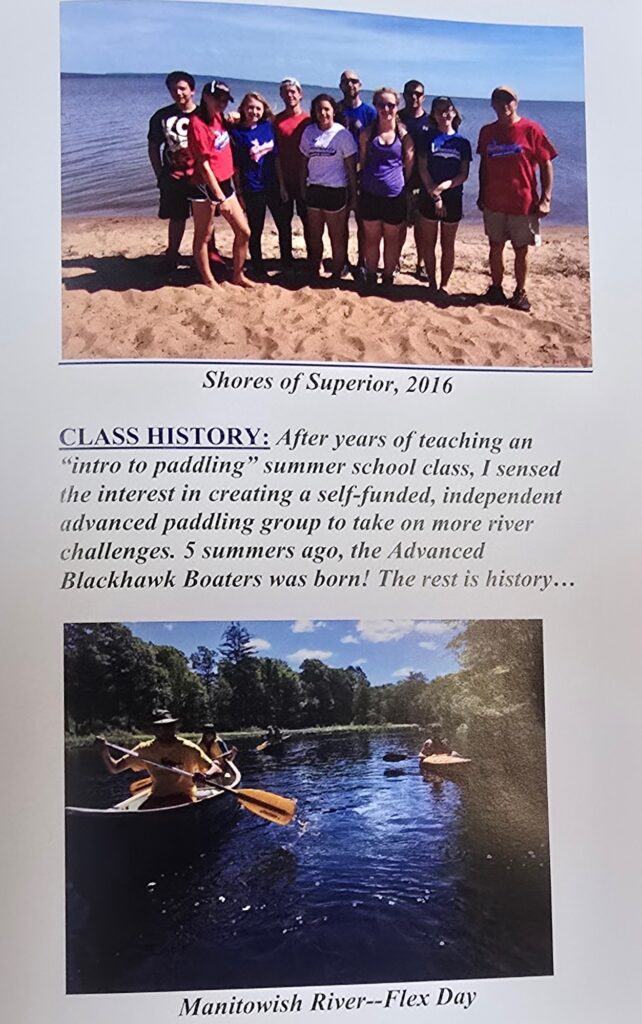
Rich proceeded to show a photo gamut and present upon the history and current state of his boating groups.
Canoecopia is yearly event in Madison, which draws thousands of people.
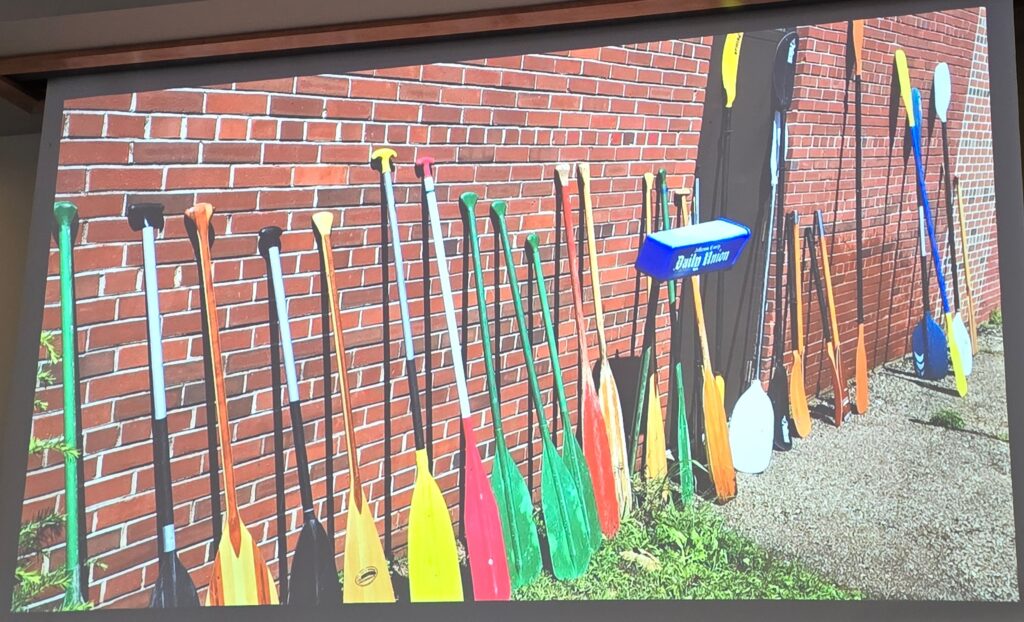
Rich spoke about boating being for any age. Recently, two men in their 80s approached Rich, to learn how to kayak. They joined Rich in Atlas Pit, and brought their own canoe!
Rich learned as a young Trinity Episcopal Church member, with a church group. Later, Rich’s family went down Trout River, Scout River, Tomahawk River.
A number of years ago, James Fitzpatrick was the superintendent of Fort Atkinson school district. Rich discussed the Blackhawk Boaters group with James, and they were approved.
A Kiwanis member asked, how many boats do you have?” Rich replied, “Around 13 canoes, 8 kayaks, and 5 boats.”
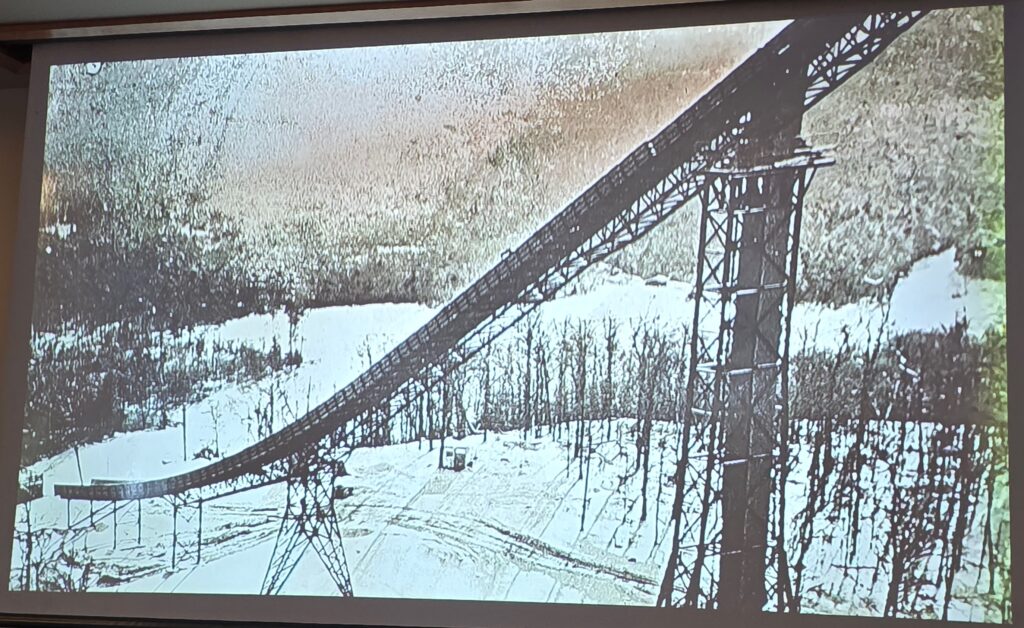
The groups go on the Yahara, Badfish Creek, Turtle River, Sugar River and others in the area. The Rock isn’t wise for 6th-graders.
The kids have several practice exercises and sessions in a Fort Atkinson pool, including starting meetings with “dips,” lifting and lowering themselves between two chairs with their arms, written tests, and practice “dry” paddling atop desks.
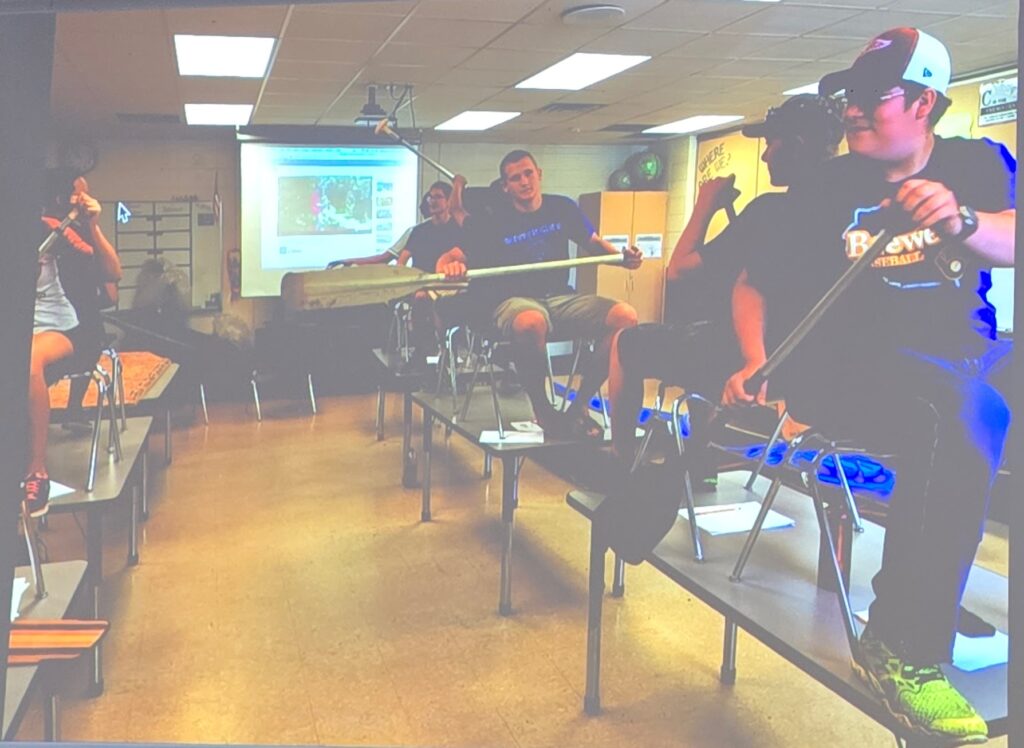
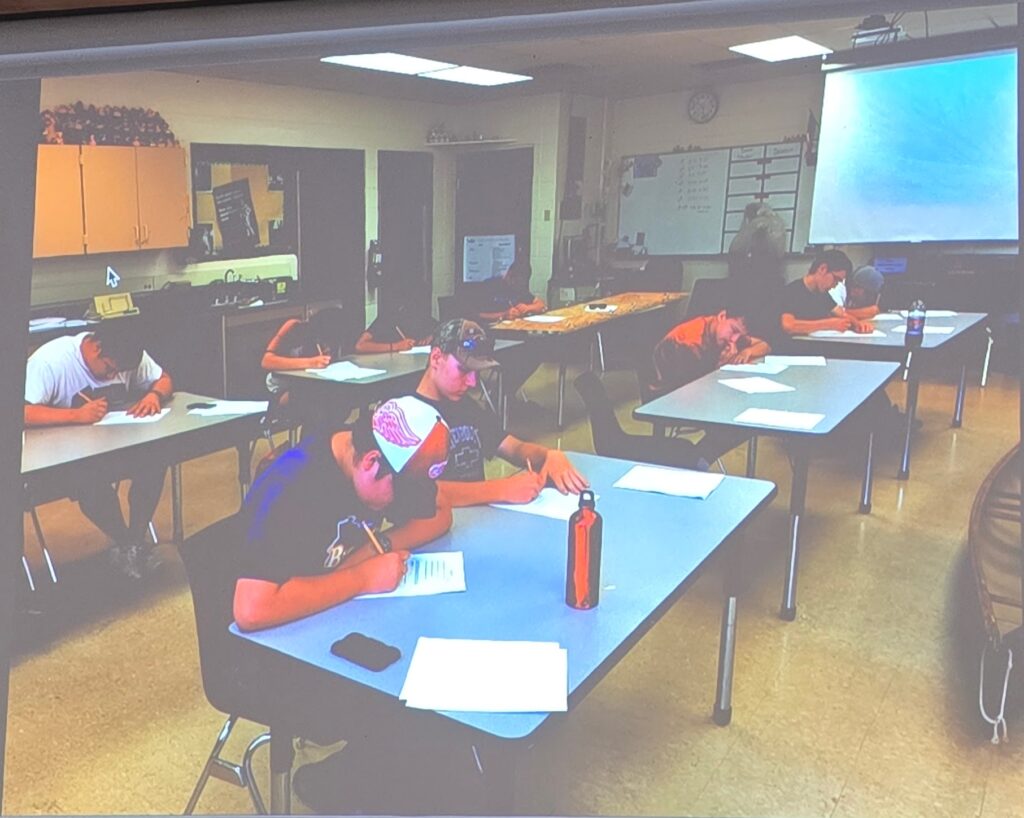
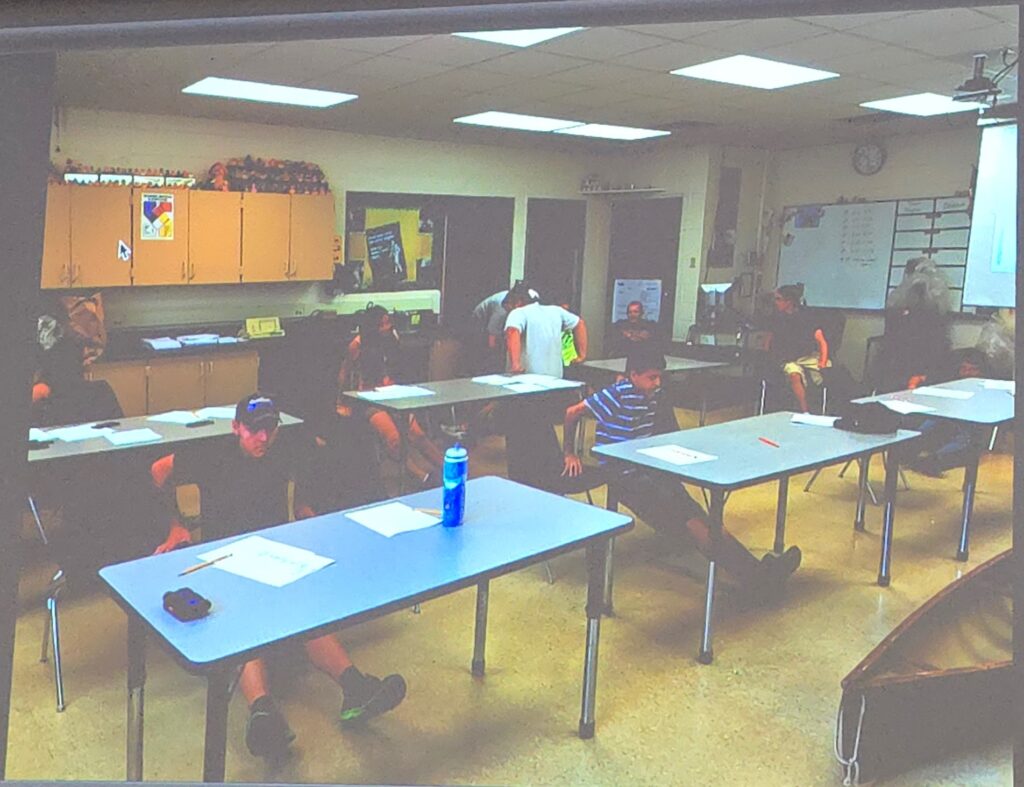
They are taught a knot for tying down, the Trucker’s Hitch.
The kids spend 15 minutes in a life jacket, motionless in a Fort Atkinson pool.
Fun fact, a solo canoe was regularly found to be the class favorite water craft.
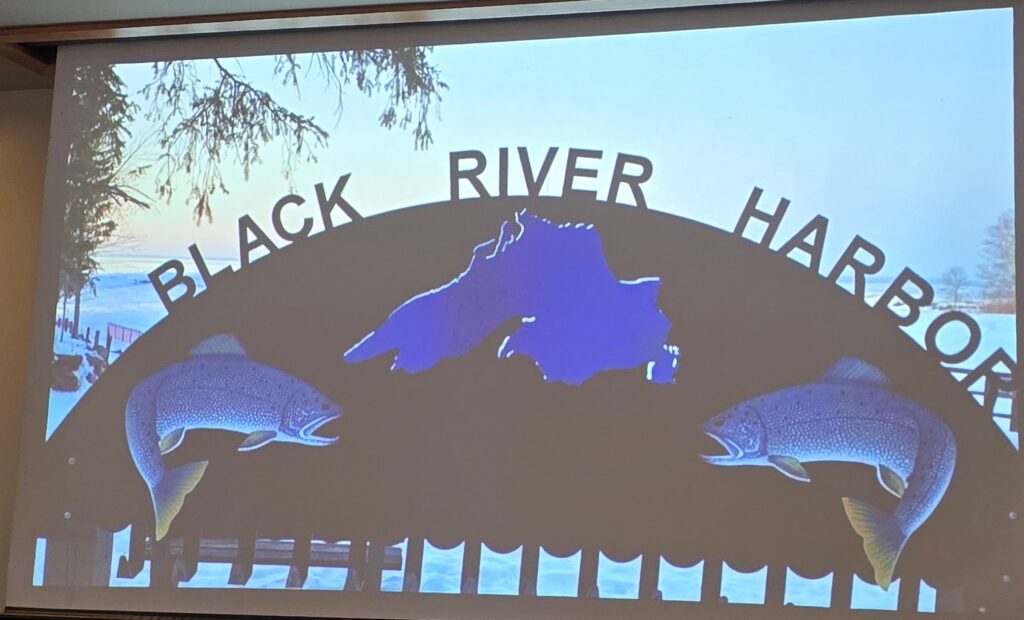
The kids’ first experience on the water is on Lake Ripley. Some members cannot swim.
Kiwanian Tom Neumann inquired, “What are the kayaks constructed from?” Rich, “Plastic is standard, some seaworthy are made with fiberglass. Canoes are generally aluminum, and RoyalX, fiberglass or Kevlar create higher end options.
The Badfish Creek rapids are a favorite.
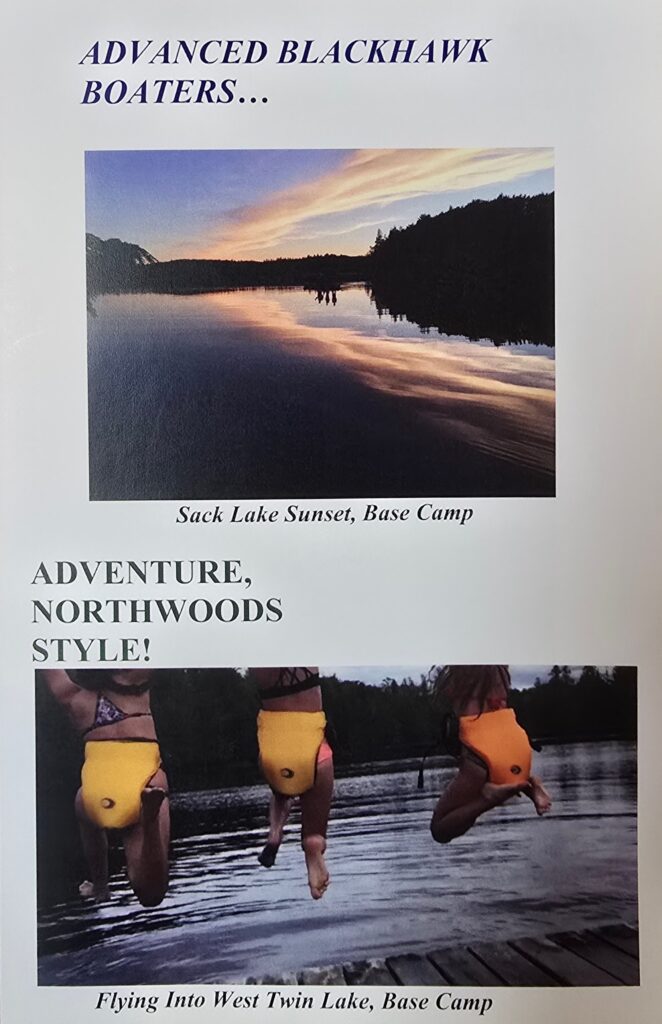
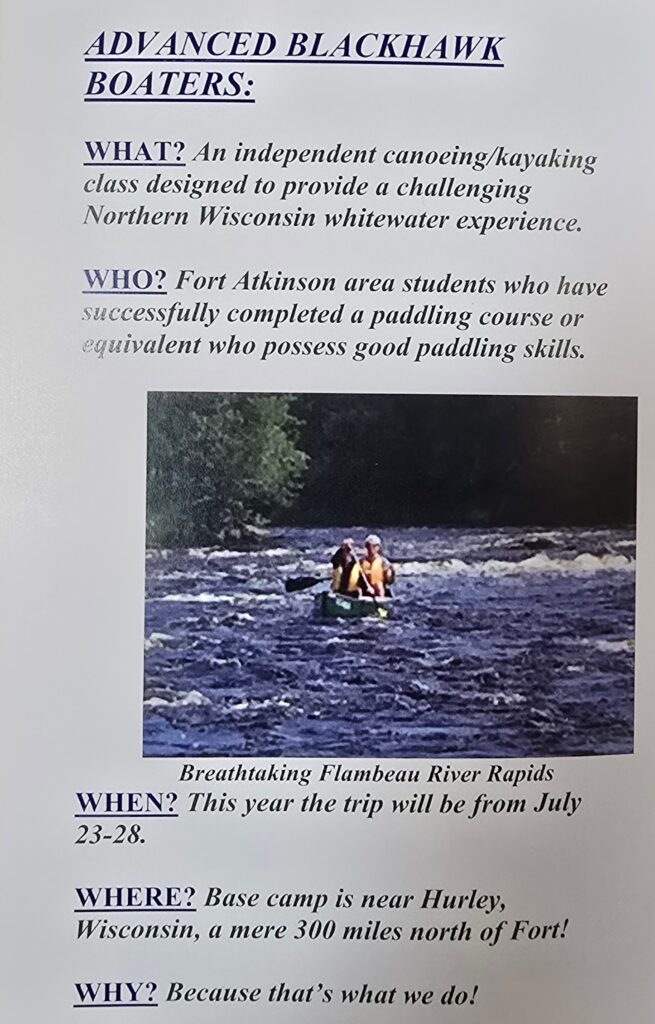
Rich later returned to James Fitzpatrick, with a new request for a group named the Advanced Blackhawk Boaters. It would be a summer school class, and include a cabin trip up North, women bunking in the cabin and men in tents, inside only from 10p-6a. It was approved!
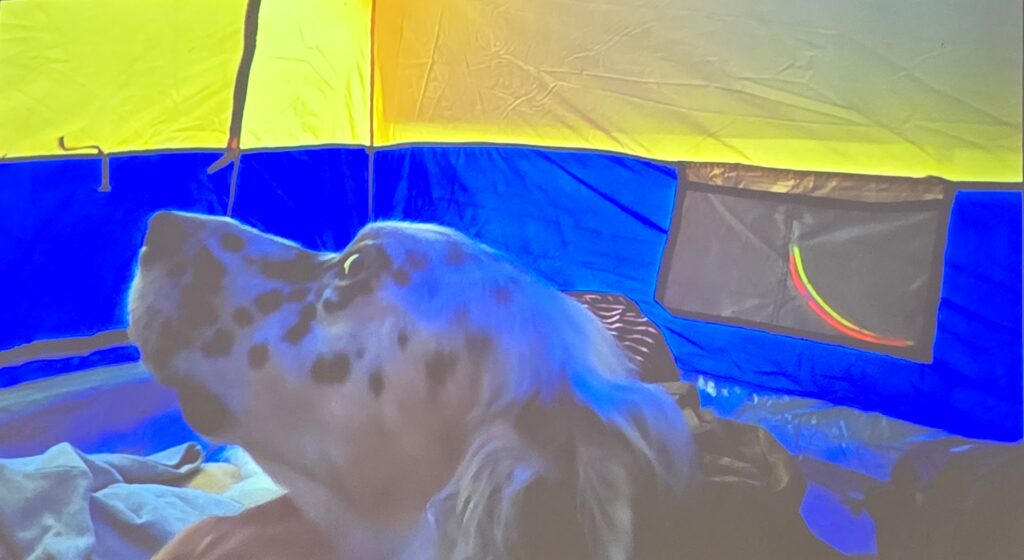
After four years, a new superintendent was hired. Overnight extracurriculars were cancelled due to budgetary concerns (for reasons such as insurance’s cost).
Rich stepped up to finance the group’s start, and continues to regularly do much fundraising for gas and extras to transport and host ten kids, the insurance and etcetera. Eventually, fundraising efforts found their footing.
This coming summer’s class is full. Past graduates and a longtime friend Coach Reed chaperone.
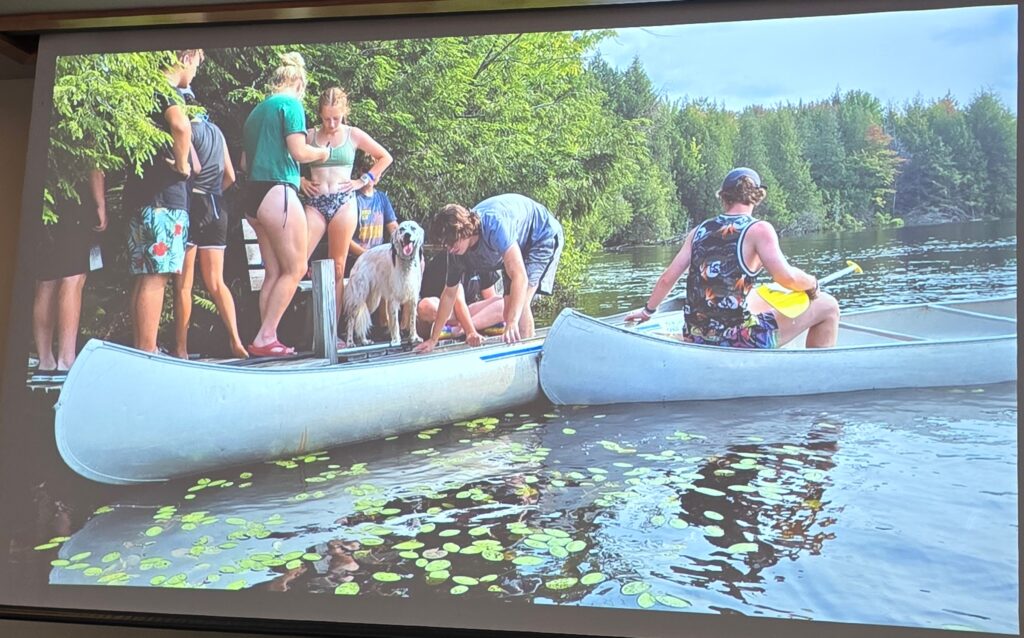
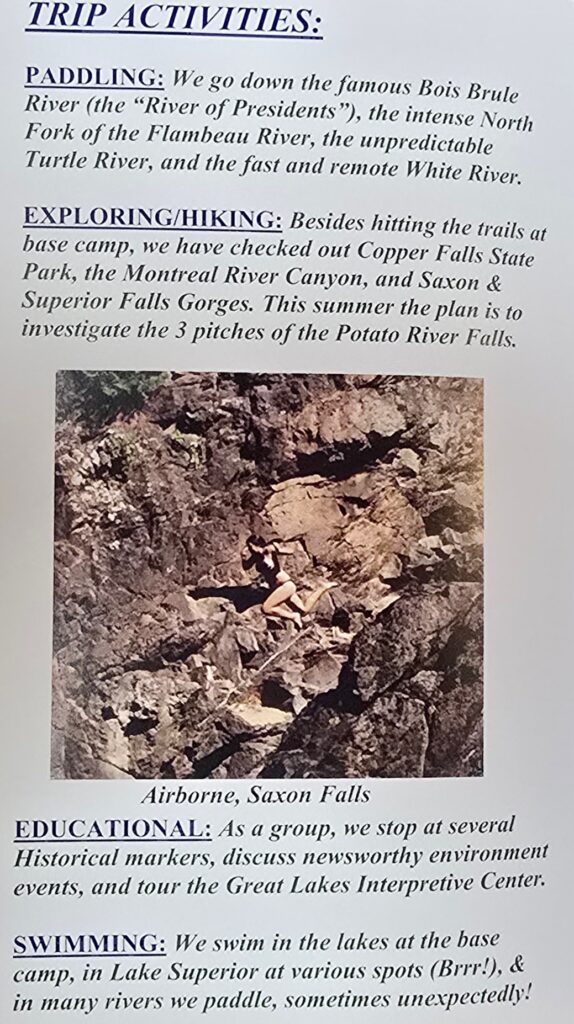
Activities up North include (e. g.) visiting logging sites, mines, and a restaurant ‘Little Bohemia’ with a backstory about a shootout with John Dillinger’s gang, for which bullet holes remain in the walls.
This year’s trip is August 27th.
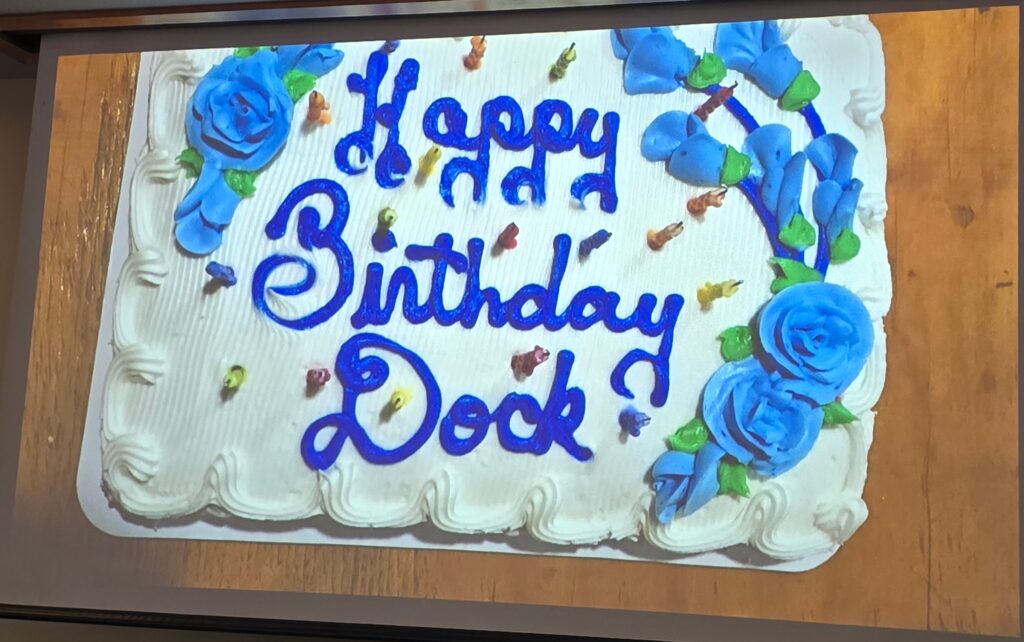
Many photos and a few short videos were shown of past trips.
The cabin has no electricity or running water. The students don’t complain.
Kiwanis member Jim Farrell asked, “Who has eligibility for the advanced class?” Rich replied, “Students from here to Fort Atkinson that can paddle are accepted. They have to have been in Blackhawk Boaters, or have been assessed.”
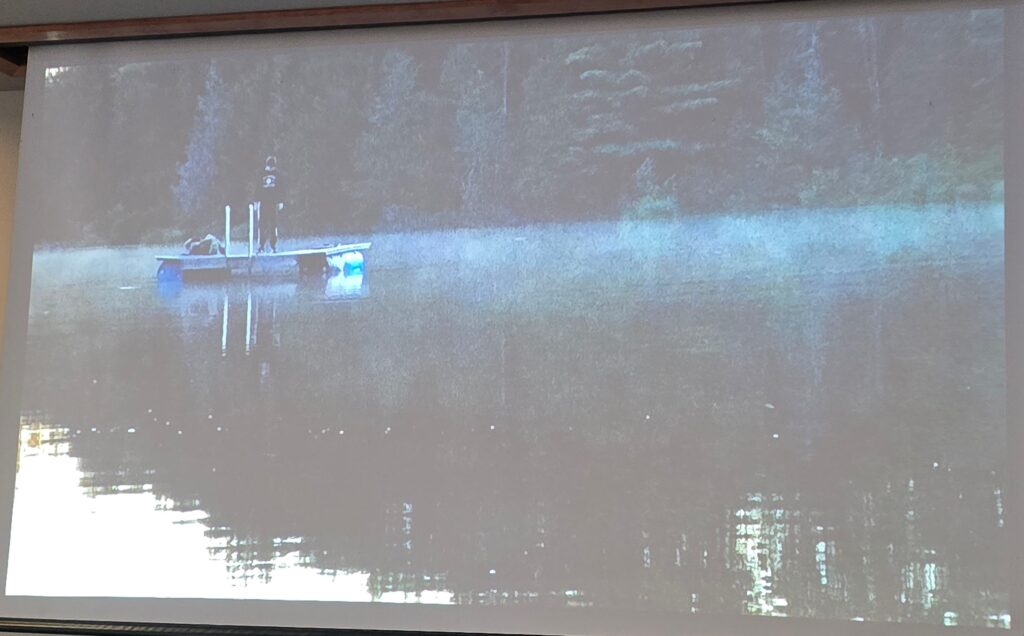
Kiwanian Greg Turco inquired, “Is severe weather an issue?” Rich answered, “Yes! One year, a girl with a broken foot attended, and a strong storm rolled in traversing the Flambeau River. The group had to go back upstream.”
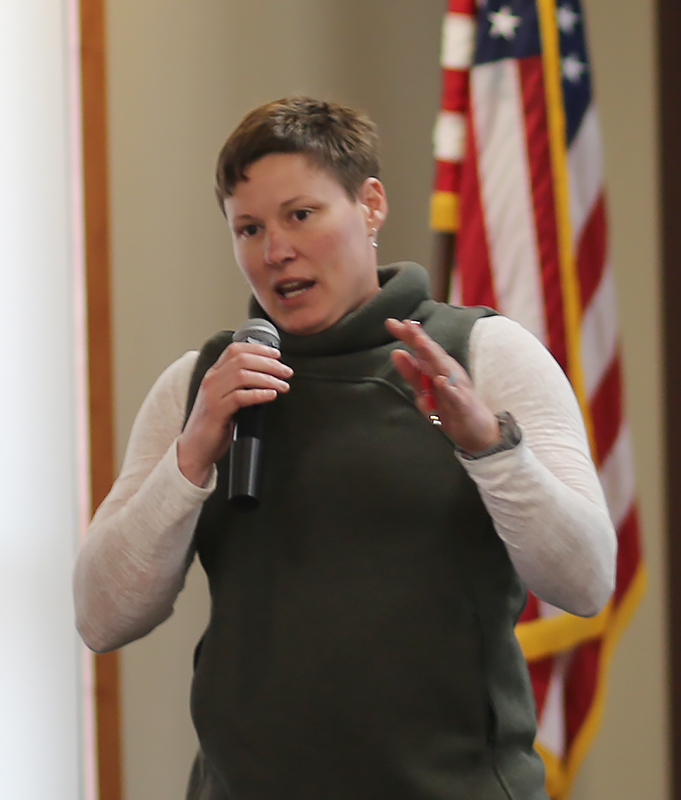
Kiwanis member John Janes asked, “Are funds available for those with low income?” Rich replied, “All students are completely covered(!), via their fundraising efforts.” John noted the classes sound like a great life experience for kids,” to which he and Rich agreed, “Yes! Off the screens!”

Brochures and cards were supplied, and it was noted to see the girl jumping into a river on the second page.
Rich’s presentation was well received and appreciated.
Ryan Lewis thanked Rich Bostwick for speaking and presented him with a Kiwanis Parker pen.
Tom Neumann adjourned the meeting with a ring of the bell at 11AM.
Reminders: Next week the meeting is located at Oak Park Place!
On this day:
1607 English colonists led by John Smith establish Jamestown at a second landing near the James River in Virginia, the first permanent English settlement in North America
1637 According to tradition, Cardinal Richelieu introduced the table knife to the world. As a powerful minister who was unpopular with everyone but the king, Richelieu had plenty of reasons to provide his dining companions with knives that they couldn’t use to pick their teeth (unseemly) or stab each other (dangerous). He ordered his staff to grind the edges and tops of his knives to round them, and the result was what we know today as the table knife
1767 Wolfgang Amadeus Mozart’s first opera “Apollo et Hyacinthus,” written when he was 11 years old, premieres in Salzburg
1777 The University of Vienna Library opens
1787 The First Fleet, headed by Arthur Phillip, sets sail with 11 ships of convicts for Botany Bay, Australia
1861 The Great Comet of 1861 is discovered by John Tebbutt of Windsor, New South Wales, Australia
1884 Institute for Electrical & Electronics Engineers (IEEE) forms in New York
1916 First observance of Indian (Native American) Day
1918 First US airmail stamps are issued (24 cents)
1930 Colonel Jacob Schick is granted a US Patent for the first electric razor (US1757978A)
1938 Jazz trumpeter and singer Louis Armstrong records the classic New Orleans tune “When the Saints Go Marching In” for Decca Records
1940 Winston Churchill faced the House of Commons for the first time as prime minister and told the members that “I have nothing to offer but blood, toil, tears and sweat”
1942 Helicopter makes its 1st cross-country flight
1950 Diner’s Club issues its 1st credit cards
1950 Stevie Wonder, a child prodigy who developed into one of the most creative musical figures of the late 20th century, was born in Saginaw, Michigan
1955 Mickey Mantle hits 3 consecutive HRs of at least 463′
1958 The trade mark Velcro is registered
1960 First launch of the Delta satellite launch vehicle; it fails
1960 A Swiss expedition led by Max Eiselin reached the summit of Dhaulagiri in the Himalayas
1966 The Rolling Stones release “Paint it Black” single in the UK
1972 Milwaukee Brewers beat Minnesota Twins, 4-3, in 22 innings (started 5/12)
1978 Henry Rono of Kenya sets record for 3,000 m steeplechase (8:05.4)
1982 Chicago Cubs win their 8,000th (beat Astros)
1982 Soyuz T-5 launches carrying Anatoly Berezovoy and Valentin Lebedev for a mission lasting 211 days in space
1983 Reggie Jackson becomes the first major leaguer to strike out 2,000 times
1989 Approximately 2,000 students begin a hunger strike in Tiananmen Square, China, to force a dialogue with the government ahead of a visit by Soviet leader Mikhail Gorbachev
1991 Apple releases Macintosh operating System 7, codenamed the “Big Bang”
1992 Three astronauts simultaneously walk in space for the first time
Leprechaun Day celebrates leprechauns and their history. Legends related to leprechauns date to the eighth century, to Celtic folklore about water spirits called luchorpán, a word for “small body,” who were two or three feet tall and said to live in hollow tree trunks or underground caves. Two types of fairies from Irish mythology have similar characteristics to leprechauns. Clurichauns love drinking, mending shoes, and treasure. Far darrigs are depicted as troublemakers who give people nightmares and have red coats instead of the green ones associated with leprechauns. The name for leprechauns may also be associated with the Irish word lobaircin, which means “small-bodied fellow,” and leath bhrogan, which means shoemaker.
Apple pie is seen as being very American. Just how American? Well, there is not one but two National Apple Pie Days in a year. And it’s almost a certainty you’ve heard the phrase “as American as apple pie.” How ironic it is, then, that apple pies didn’t even originate in the United States, nor did apples!
Apples came from Asia, and their seeds and cuttings were brought to the Americas by Europeans during colonial times. Prior to this, only crab apples were grown in the Americas. The first apples brought to the Western Hemisphere were tart and were used for making cider. It wasn’t until around 1800 when apples better suited for pies—with a higher acidity and crispness—began being grown in the United States. It was also around this time that Johnny Appleseed began traveling the country and helping solidify the association of the apple with America.
The earliest record of the phrase “American as apple pie” dates to 1924, when it appeared in an advertisement in the Gettysburg Times. The association between apple pie and America became inextricable by World War II when American soldiers would tell journalists they were fighting for “mom and apple pie.” This eventually led to the phrase “As American as mom and apple pie.” It became a prevalent saying in the United States during the Postwar years.
The earliest known apple pie recipe was printed by Geoffrey Chaucer in England in 1381. It included apples, spices, raisins, figs, pears, and saffron in a pastry crust. A Dutch apple pie recipe was found that dates to 1514. Dutch apple pies usually have a lattice pastry top. French, German, and Italian apple pies all appeared in recipe books before American colonies had been settled. Many early apple pie recipes didn’t include sugar, and some early pies were made in inedible containers called coffins. Today, apple pie usually has a bottom and top crust. It can be served hot or cold and can be topped with ice cream, custard, and whipped cream.
Minutes by Ryan Lewis.
Credit: Dave Figi, and Ryan Lewis, photographs.
Note: Kiwanis and its members are not responsible for errors or omissions. We are open to discussion if you would like to request an alteration. This content may only be reproduced without alteration and with credit to the original author(s).



Leave a Reply
You must be logged in to post a comment.